Tag: discipleship

Forgotten Gifts of the Spirit

Church is team. It takes diversity for a unified church body to work, both within the local church as well as the universal church. Smoldering in the back of my head is the issue of Seminary, thanks in part to Pastor Tim Raymond. Back in May, Pastor Tim, a peer in seminary and a man of God I had the privilege to growing up with, wrote a series on the importance of seminary (Part one Part Two Part Three Part Four). Here is the opening to the series:

“For decades, seminary education has endured the slings and arrows of bad jokes, unkind mockery, and downright slander.  If I had a quarter for every time I’ve heard a disillusioned preacher intentionally misspeak, recalling his years in “cemetery, I mean seminary,” I might be able to buy something edible.  It would be easy for the average Christian to think wrongly, like Nathaniel did with Nazareth, that nothing good can come out of seminary.”

Wisdom & Knowledge
Wisdom & knowledge seem to be neglected gifts. Bill Hybels mentions often how leadership is often not developed or neglected in churches. For a long time, I believe that to be true. As I look over the course of my lifetime, it seems wisdom and knowledge are largely neglected. Churches rarely promote the life of the mind. Wisdom and knowledge feeds solid leadership and solid pastoring. It gives tools to evangelism and mercy. In the fear of heresy, apathy and/or elitism, we’ve neglected two vital gifts.

Seminary is vital
The church both local and universal need places of scholarship where those gifted with wisdom and knowledge can develop and build the body of Christ. I believe it is a duty of a pastor to be a theologian. Having the gift of leadership or shepherding doesn’t give us an excuse to be lax in our theology. It does mean we need to lean on those gifted in ways we are not. I’d be lost preaching through Romans if it were not for those gifted with wisdom and knowledge. While true knowledge can puff up and love edifies, Paul also argues for the importance of the mind in 1 Corinthians 14.

Disciples were diverse
Often the argument against scholarship, like seminary, is the disciples were average men. This is partly true. They were also men who went through a rigorous three-year training program by a master teacher, Jesus. Afterwards the Holy Spirit instructed them. While peter was “blue collar” Paul was clearly an intellectual. While John spoke profound truths simply, Luke and the writer of Hebrews were academically astute. We need all gifts. The formation of God’s Word illustrates this.

The Bible
Biblical and theological literacy are at an all time low. The need for biblical counseling stands at an all time high. There is a relationship between these two things. Perhaps the church is reaping the costs of neglecting the gifts of wisdom and knowledge. What good is leadership or shepherding if it’s not on the firm foundation of God’s Word? Confusion on the Gospel, in worship and the church relationship to culture flow from not heeding wisdom and knowledge. We need to heed Hebrews 5:11-14.

The bottom line:
We need seminary and seminaries don’t need to be places where people lose their faith or passion. Like Tim, I found this to be quite the opposite. I’m immensely grateful for the discipleship Baptist Bible Seminary provided. While I understand that not all will or can attend seminary, I do think one should if at all possible. We need places where we can benefit from those gifted with wisdom and knowledge.

For peace?

20120726-112706.jpg
People often ask for peace. I spoke with young men this morning about for keys to having peace. A good reminder for us all.

1) Work through conflict Phil 4:2-3
Work through or help others work through conflict. Avoiding conflict will result in a lack of peace. Choose courage and work through conflict.

2) Worshipful spirit Phil 4:4-7
When we rejoice and thank God for all situations we have peace. A worshipful spirit means we trust in God’s plan. Choose joy, it demonstrates faith.

3) Make disciples Phil 4:8-9
What we focus on we’ll see in others. By focusing on good things we’ll see it others, and then take the next step to apply to our own lives. This is the discipleship process. Making disciples leads to peace. Choose to focus on Nobel things and live them out.

4) Be content Phil 4:10-14
Possessions can distract us or they can propel us. We can accomplish God’s will with what we have. We can bless others and help others accomplish God’s will when we have an abundance. Choose to be content with what you have, it will maximize your ministry.

The bottom line:
If you’re lacking peace from God, check these areas as a start. They’ll take you a long way on the road of peace.

Prayer Mentoring: Just talking to God

20120612-104641.jpg

A few different and disconnected things in life pointed to the issue of prayer. Prayer eludes us often. We love it, it’s hard work, and often we don’t always understand it. Even the disciples- those traveling regularly with Jesus- struggled with the issue of prayer and asked “Lord, teach us to pray.” Given these things I want to write about prayer and it’s role in our relationship with God.

Prayer mentoring
Prayer is something that is caught not just taught. I would not classify myself as a master of the subject. I frankly don’t think I’ve had enough life experience to say I’m great in this area. In the prayer mentoring posts I want to echo mentors of mine who have taught me to pray, as well as share things in my journey with prayer. Blogging & writing isn’t the best way to learn how to pray. So, if you’re following this, seek out a partner to walk through this with.

Just talk to God
Just pray. Don’t try to be poetic or anything, but just start praying. A mentor of mine in college and seminary said this: “If something is truly worth doing, it’s worth doing poorly.” The meaning of this proverb is this: You just need to start. You can always improve. Don’t let “am I praying wrong?” stop you from something that is important. Actually, something that is vital. Talk to God like He’s right there in the room with you… because He is!

Just ask
Matthew records Jesus saying this: “Ask, and it will be given to you; seek, and you will find; knock, and it will be opened to you… If you then, who are evil, know how to give good gifts to your children, how much more will your father who is in heaven give good things to those who ask him!” We have not because we ask not, so just ask. That’s what prayer means, to ask. Here is a thing you can ask God for right now: God, help me learn how to talk you.

The bottom line:
Prayer is vital to our relationship with God. Prayer is also something that is caught not just taught. There are two key things to prayer: talking to God, and asking. In future posts we’ll focus on a different aspect to prayer. Most likely these posts will be on Tuesday. Ok, here’s your assignments for this week…

Assignments:
Pray.
Seek a prayer partner to work through learning how to pray together.
Ask God to help you learn how to pray.

On Humility: My guide to become a recovering fundamentalist Part 3

“You should read my book, ‘Humility and how I achieved it.’” ~Unknown
“Every side has it’s ‘fundamentalists’.” ~Joe M.

Admit it
You’re arrogant. We all struggle with pride. Arrogance isn’t exclusive to any movement. This is why it’s best to deal with heart issues; not create a strawman. For example, I interacted with two churches that made this statement:

“They’re not [blank] because they’re wearing [blank]. It’s important to [blank] to [do what God wants].”

One church was a hysterical fundamentalist church. The other was a progressive outreach oriented church. Both had the same heart problem and both make a good point. Name the issue and its most likely there is arrogance on both sides.

Humility modeled: Dr. Arp
“Right now, this is what I believe what the text is saying,” said Dr. Arp. My tongue dropped to the floor. I’m in seminary, the professor is to be the grand know all guru of all things Bible. Dr. Arp amazed me by his humility. He was a student of the Word. (And a really hard grader!) More than anything he discipled me to approach the Scriptures with humility and to listen. Confidence and humility are not exclusive.

Humility modeled: John Calvin
I read Calvin’s Institutes of Theology. I wanted to see if I was truly a “Calvinist” or not (a discussion for another day). I was amazed by the humility and grace Calvin projected in his writings. He demonstrated confidence in what he said, but also grace and approachability. Those who debate “Calvinism” could learn a lot from Calvin’s humility.

Humility prescribed: St. Peter
Peter had what I like to call “foot in mouth disease.” Ambitious or spirited people often struggle with that. He says this in 1 Peter 5: “Clothe yourselves, all of you, with humility toward one another, for ‘God opposes the proud but gives grace to the humble.’” It’s in the context of shepherding the church. This attitude stands out as I see Peter struggling with this area.

Jesus
Jesus didn’t stand out in a crowd. He didn’t come into the world with much fanfare. As much as we bash religious leadership of his day, He did interact with them and some came to believe in Him. Jesus was a man’s man, and Jesus was fully God. Jesus dealt with and pointed to heart issues. There was times He was stern, and times he was very approachable. Our task is to be like Jesus. Without humility, we wont’ get very far.

The bottom line:
To become a recovering fundamentalist you need to be humble. Act with humility and grace instead of reacting to a strawman out of arrogance and vindictiveness. We all struggle with pride and arrogance. No movement claims a monopoly on this. Listen, be approachable, and seek to be like Jesus.

Brush your teeth… A parable

Perplexed and scratching his head, the man could not figure out why his presence people dread. His posture, clothing and appearance were fine, it was his breath that was far from divine.

To flashback a time or two is to visit a statement when the dentist was through. He said to the man most perplexed what at the end of the day he should do next. “Brush your teeth, floss & rinse, this will keep you like a prince.” With an eye roll and a droll sigh, the perplexed man waved goodbye.

I am fine this I see in how everyone one interacts with me. A week or two went by without so much as a leave or cry. But as time progressed each week and day, something told people they should not stay. Each week it became clear, the smell of his breath you had fear.

So the perplexed man sat wondering what to do about peoples’ reactions that were no longer new. He ate things minty and sweet, but that only lasted a moment before defeat. Then he remembered his scoff to a dentist’s advice given so soft. Perhaps the man was right and was trying to help not fright.

“Husbands, love your wives, as Christ loved the church and gave himself up for her, that he might sanctify her, having cleansed her by the washing of water with the word, so that he might present the church to himself in splendor, without spot or wrinkle or any such thing, that she might be holy and without blemish.” ~Ephesians 5:25-27

Read your Bible!

The next thing…

Fresh paint makes the old stand out. Once its done you see the next thing that needs to get done. Once that’s done you see the next. Cleaning up a house or building is like growing in Christ. Everything can’t get done at once. But, once you finish one thing, the next thing stands out. Here are a couple things to think through as you head into the new year…

Plan
Set up a growth plan. Keep it simple, doable, and big enough to stretch you. People often get scared or short-circuit with words like “review” or “evaluate.” Developing a growth plan serves the same function but has an added bonus: A growth plan focuses on where you’re going and can do, not where you’ve been and fall short. This is why Disney focuses on growth plans instead of annual reviews.

Focus
Complete a step that will push you to the next step. It’s like dominos. Focus on what’s going to propel you to the next thing when you’re done. Watching dominos fall is sweet when things are place and well executed. The big secret to focus is saying no. The power of no is a stronger yes.

Celebrate
Rest and enjoy your work. God made us to work and He made us to enjoy life as well. People who are driven would accomplish more by trying to do less. For example, many people who are big into physical fitness overwork themselves. This prevents them from achieving the goals. They’re over working. A trainer of mine said most people who are into working out would become stronger if they did less.

Do something
If you’re clueless where to start, just start. The advantage of planning is that its easier to change with a plan than without one. The big thing about just starting is humility. Ask for help. Sometimes you need someone to just say, good plan, go for it. To quote photographers, the best camera is the one in your hand. Just get started.

We’re starting back up….

Back in September I began the process of deciding where to take my blog. I haven’t written much since then because to post to just post something doesn’t make sense to me. While consistency is king for blogging, posting to just post doesn’t make sense. I invested time in reading about blogging and other pastors who blog or tweet. Here are some conclusions.

Blogging is legitimate
I listen carefully to older saints, and they make a strong point on younger people in ministry writing about ministry. Some go as far as to say younger people shouldn’t. I obviously disagree with that. Here is why, we need one another. I think a wise person is able to weigh what a person says. Sometimes I find older people forget the rawness and energy of starting out jus as younger forget to look and listen from the mistakes of older saints. I view blogging as a community exercise. We need many voices.

Blogging needs to avoid hot issues
One peace of advice given is to not blog about hot topics if you’re working through them in your church. This is a big issue I looked at as to blog or not blog. I like to blog about what I am passionate about. I also recognize there is a church audience that can read this blog. This is amplified by my liking to discuss new ideas. Obviously there are things I need to avoid and the question is can I blog and avoid them. To quote my son: I think I can. (For the grammar police, peace was chosen specifically.)

Blogging is writing
I like to write. I enjoy it. Pretty much that is why I started blogging. I’m not so concerned with building an audience as I am in enjoying the writing and refining ideas. There is much to right about, such as developing ideas I had to cut from a sermon, book reviews, or things God is teaching me.

The bottom line:
I’ll try to blog about 2-3 times a week. It will continue on the line of life and ministry.

Why not Wednesday? iDeas

The best ideas for your field is often not found in your field. I love collecting proverbs, and this one is a big one. The proverb came from 3 things: Bible, Graphics Arts, and Kelly. If you are stuck, here are some ideas on taking the next step.

Bible
In studying wisdom literature a key theme stands out: wisdom comes from afar. It is a key aspect and pattern. This isn’t a contrast between man and God’s wisdom, but it is a picture of how wisdom is a pursuit. It’s beyond and one must seek it. Between proverbs and Ephesians there is a relationship between godliness and wisdom. One requires and builds on the other. Ephesians describes wisdom as a process. “Be careful how you walk, not as unwise men but as wise.”

Graphics Arts
Some of the best discussions and ‘how to’s’ of collaboration is found in the graphic arts industry. Successful graphic art involves taking complex ideas and making them understandable. It involves merging complexity, essential concepts, and organization. One could define graphic arts as the merging of left and right-brained activities for effective communication. One consistent piece of advice in graphic arts is getting away. Not to learn about their field, but to learn about something unrelated- and there is where some of the best ideas arrive.

Kelly
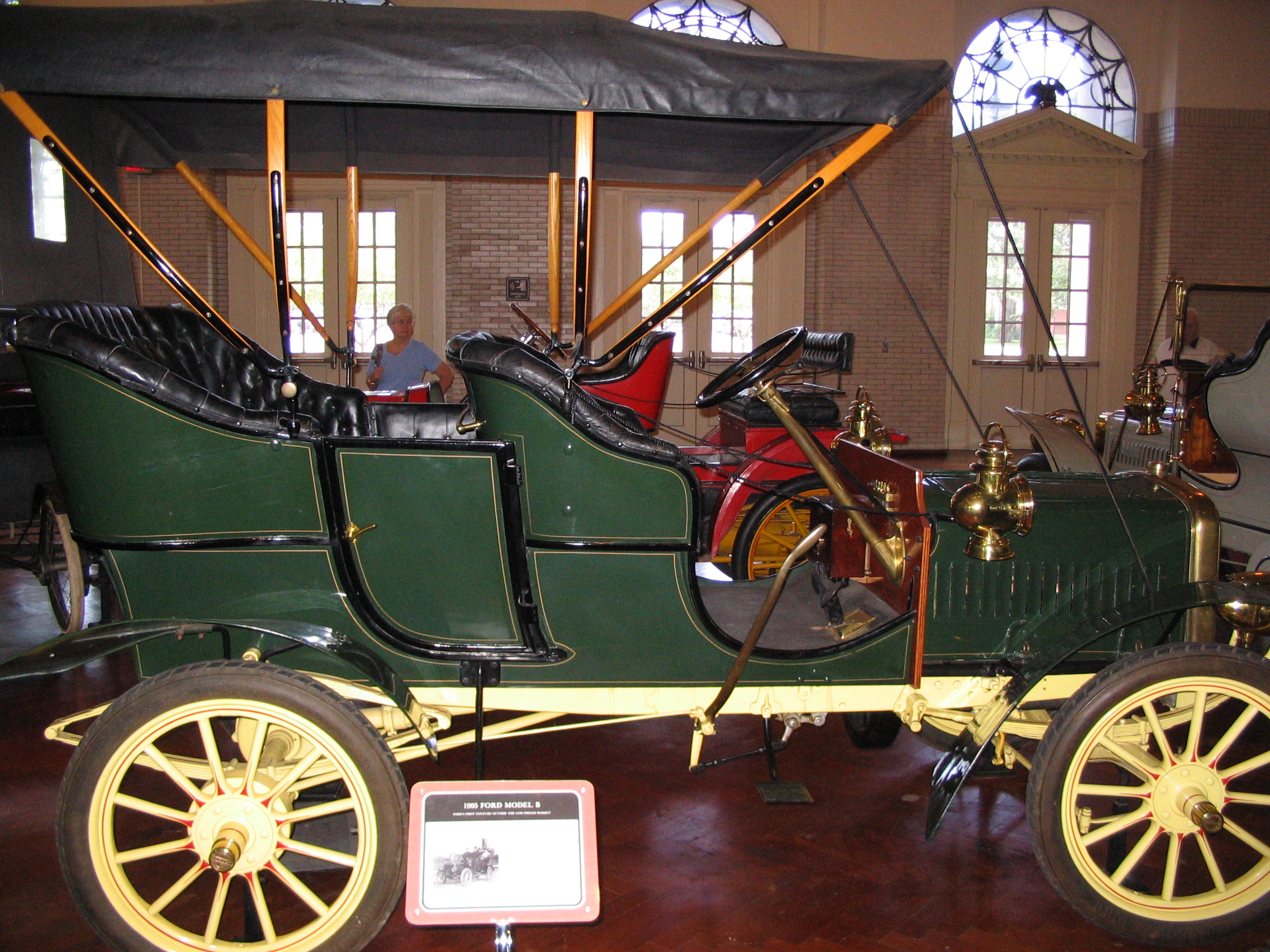
“Old cars look like wagons.” Kelly and I were walking through the Henry Ford Museum. As we were walking through the cars section we saw the evolution of the horseless carriage. You can see lock in- a car must be a self-powered vehicle to a car being its own thing. Our understanding of technology and life changes things. You can see stages of development. The challenge is how to you get out of your box? The car industry is filled with failures and triumphs. There is a process: discovery, replication, barrier, new discovery.

The bottom line:
If you’re stuck, look outside your field. Sometimes you need a fresh look at something different to help you get to the next step. This is true of many things in life. After all, the Bible tells us to seek wisdom.

Divided

Avoid…. Doom & gloom… The tendency when dealing with the church division is to get all critical or guilty. The Bible makes it quite clear that one day the church will be perfected and we’ll be ok. Rather than see a mess, let’s get together and put the puzzle pieces together. We really do have all the pieces!

Divided by age
A serious division I’ve seen in church since I started attending at 5 years old is age separation. There are huge advantages to meeting people where they’re at. There are huge advantages to kids being with kids, young couples being with young couples, etc. We often go to far. The issue with 20’s and young 30’s leaving the church is an example of the division by age problem.

Divided culturally by age
Each generation in America became its own subculture. Think about it. Each generation has its own style, music, language, literature, forms of communication, etc. Given culture’s push to move people into their niche, sub-cultures grow and multiply at a rapid pace. Society is overly divided and segmented. Who is going to bring life together?

Two dangers:
Division by age results in a breakdown of discipleship. In talking with pastors, there is often a break down of discipleship post high school. A man goes to Bible college and maybe seminary afterwards, but post graduation continued discipleship is not a guarantee. It’s almost as if the churches we grew up in handed off leadership development to colleges & seminaries, seldom hearing from them during or after our training. That’s just pastors, a very small segment of our 20’s & 30’s. It is the trend in other areas as well.

Division by age results in loss of perspective & importance. The church needs the energy, ideas, enthusiasm, and I dare say mistakes of youth. Equally, the church needs its seasoned saints to offer their wisdom, be the voice to tell us when we need to slow down and let God, to make sure we don’t forget that God really is at work. Many problems could be avoided by listening to the older. Refreshing viewpoints and challenges to continue growing come by listening to the young.

Two cures:
Retire retirement. An example: I wish every church could have a “retired” pastor who shepherds the pastor or pastors. “Retired” pastors have been there. They know what’s human nature vs a unique situation. They know the questions to ask. They have the sense to let things work themselves out or to get involved. Elder pastors can fill a need in churches: pastors need shepherding too. Retirement is heaven for saints. Until then, seasoned saints have much-needed work to do. We need them to do it!

Take seriously body passages. (Romans 12ff, 1 Cor 12, Eph 4-6) We are truly one body! We are one church. Church should be a place where life comes together. Too much division hurts the body. Brining the body together is an essential because it is the Gospel of Jesus Christ that binds us together. Affinity based groups are not wrong! We need them. Having everyone together all the time is counter productive as is the division mentioned. Viewing church as body needs both.

We need to view and operate the church as one body. The danger of focusing too much on affinity is it becomes what binds vs the Gospel. The danger of too much division is you lose. Judges 2:10 There arose a generation in Israel who did not know God nor the things of God. Where did the breakdown start? It ended with not teaching children, but it did not start there.

The bottom line:
Seriously, we have all the pieces to do incredible things for the Gospel. We cannot accomplish it divided. When one part suffers, we all suffer. Growth happens by what each part supplies. At the day of Christ Jesus, we know the job is done. We or the saints after us will get it figured out. The key is putting the pieces together, and that has never been more available than today.

The ideas and energy we need is with the youth. The road map to get there is in the hands of our seasoned saints. Perhaps that leaves the rest of us carrying the middle. It gives a different sense and feel to leadership and our “most productive years.”   Think of it this way: Can We be the hero? What if We is the hero? Is We what Jesus meant in His John 17 prayer? What would happen if We, the church, became the hero?

Conflict Part 4: You need mentors!

The key to learning how to handle conflict well is having good mentors. How to work through conflict in a way that puts the relationship and growth as the priority is an art. Books and reading can only take you so far. The Apostle Paul gave instructions for people to help other people out through conflict. For the last post, here is a human-ography (bibliography) for the Conflict series. In a real sense, this series was over 10 years in the making.

Carefront: Pastor Matthew
Pastor Matthew did 2 critical things: 1) He waked me through conflict as I started out in pastoral ministry. 2) He taught me how carefronting is living out what the Bible expects of us. I gleaned the term carefront from him. Words mean things, and carefront sets the proper tone for handling conflict.

O.I.C.: Dr. Wilhite, Peterson, Dr. Austin
These gentlemen developed a process for handling conflict that works on a variety of age groups, uses the side door, and understands that conflict is part of our growth. A key often left out is the “how.” O.I.C. gave me the “how” of conflict. Many can tell you what to do, but how is important. These gentlemen gave me the how.

Q1: Pastor Jake
Years of experience and walking with God through conflict is a gold mine. That is Pastor Jake. He would often remind me that “God is the one who grants repentance.” Counseling people through conflict and issues has its own pace. Rushing conflict because we want to get it over with is dangerous. Pacing is an art involving great wisdom and relying on God. It needs prayer. Everyone needs a Pastor Jake.

Q2 & Q3: Dr. Jeffery
In a seminary chapel on handling conflict in marriage, President Jeffery gave us a chart. On each axis stood one of the questions. In the upper right corner was a dark circle called the “The region of conflict.” He took the chapel the explain the tool and how to gauge when or if we should carefront. He developed or learned of the tool in his years of pastoral ministry.

The bottom line:
Conflict is a reality of life. We cannot avoid it. To navigate these growth opportunities well you need mentors who will guide you and give you the tools and faith needed. Mentors are the difference between a light at the end of the tunnel and the light above the dentist chair. Mentors give us the hope as they equip us to be like Christ in and through conflict. They are the light God uses at the end of the tunnel because they’ve been there.’’

To my mentors, thanks!