Tag: culture

Think. Judge. Redeem.

IMG_2777Let us change the discussion from navel gazing at ‘the why’ of our problems and look to solutions. One sentence on the why of the “church” problems: Unbiblical thinking combined with lack of thought and theology leads to poor discernment and a mess. Now that the problem is out of the way, we can stop reading numerous church is blah blah blah articles. A wise professor drilled three concepts that will help us overcome: Think. Judge. Redeem.

Think.
Proverbs teaches us to be wise is to be godly. Ephesians 5&6 teaches us to be godly is to be wise. In Ephesians 4 as well as Romans 12 the Spirit points directly at the life of the mind. Christianity must work in the midst of suffering and chaos of our current world. And it does. Our fear stems from a lack of thought. Reason and faith are not opposed to one another. Our devotional life must ponder the deep questions of life as we study the Bible. Renewing our mind is a critical aspect to worship. Jesus did say we will not only worship in spirit but also in truth.

Judge.
God is the source of all truth. In our current reality there is evil and suffering in the world. The question we then need to ask is how to we discern good form evil? Developing the mind is for the pragmatic result of discerning between good and evil, and between better and best. It is to, as Jesus stated, be wise as serpents but innocent as doves. This level of discernment is expected of us as Christians. (Read Hebrews 5:11-14)

Redeem.
Jesus did not come to condemn the world, but to save it. The world is not a mere reference to people, but all creation as well. As we discern truth from error we must answer the question of how to redeem it. As Paul states, redeeming the time for the days are evil. How can we take an object that is depraved, discern the truth of it, and then use such for God’s glory? We are not to live life as a great waiting room for heaven. We are to engage in life and assist in the process of making it new in anticipation of Jesus return. This takes courage.

Lights. Trees. Action.
Think. John talks about Jesus being the light of the world. Judge. Martin Luther, a pastor in Germany, is faced with the paganism of the people he is trying to reach. One pagan ritual was bringing in evergreen trees to celebrate the winter solstice. The people needed to move away from false religion and instead focus on Christ. Redeem. The solution was to add lights to the evergreen tree to represent Jesus as the light of the world. A tradition once tied to paganism is renewed to a symbol of an incredible truth.

Act, don’t react.
We react negatively when our mind and discernment lacks development. Worse, we act in fear. Developing the mind is a critical spiritual discipline. Discernment is essential if we are to not only speak the gospel but also live it. Redemption is a critical role we play as ambassadors for Jesus Christ. Developing the mind does not take away from faith. Truly, developing the mind bolsters the reasonableness and truthfulness of the gospel.

The bottom line:
Developing the life of the mind is a solution to help the church radiate the truth of the gospel, bless our culture, and act with gracious courage.

Finding a new church family

IMG_1394I’m asked often by friends and family advice on finding a new church family. This post is much longer than normal, and general advice on the issue, not specific to any one person. I say finding a church family because I despise the term church shopping.  You’re a brother or sister in Christ, not a consumer. Church is family (Ephesians 1). I’m assuming you’re praying over every step. Pray. Pray. Pray! Ok, here we go:

Step 1: Leave justly!
If you’re relocating or if the church is sending you to another ministry, you’ve left justly. Sin is where things get messy. Matters of conscience even more so. It is ESSENTIAL to deal with matters. Leaving quietly to not create a mess robs you & the church of grace. If you are avoiding conflict or are being explosive, repent and work towards reconciliation! If you’re leaving on a good note, you should still connect with the church so people understand why and grow. Be a grace multiplier not a grace robber.

I am not saying it is wrong to ever leave a church family. I am implying that in North America we trend towards consumerism or conflict avoidance too often. Don’t be a tool of satan or live the sinful attitude of church consumerism. To be clear: Make sure you leave justly. Let’s try to avoid awkward when we’re in heaven moments.

Step 2: Take a good look in the mirror!
You are a saint because Jesus paid for your sins. Until you see Jesus face to face you’ll struggle with sin. Second, you are a unique part of the body of Christ. Your struggles and your gifting (often two sides of the same coin) are part of church growth. Before seeking a new family, take time to look in the mirror. How are you doing spiritually? What lessons have you learned from you earlier church ministry? Is there a new passion or calling God is giving you? Are you pursuing God or yourself?

Searching for a new church family will put you in a critical spirit. You will notice lots of things you do not like or worse you’ll overlook things because your consumerism tendencies kick in. (A big sign of that is compromising your theology for preferences.) Look in the mirror and make sure you’re very well aware of the log that is in your own eye. Church is family, meaning your job is to love and support the family. Church is not about you, but do not neglect how God wired you. God may be calling you to a particular church because it lacks what you have to offer, worts and all.

Step 3: Theology then method then people
Sound biblical teaching & theology is essential. If they’re not teaching the Bible, RUN! There is a difference between teaching from the Bible and teaching the Bible. If the church doesn’t hold to sound theology it will not be good in the long run. We act based on what we believe. Key question: How big of a deal is Jesus & the Bible to the church?

Next comes method. If method comes first, repent of ‘methodolatry.’ For example, if you’ll only look at churches with certain music or a certain program like AWANA, chances are good you’re committing to methodolatry. Don’t overlook something because it lacks a method or has a method you’re uncomfortable with. Don’t write off methods either. Use discernment, ask questions. Methodology matters. Sometimes a method that is important to you, but lacking to a church may be a result of no one to lead or support it.

People are essential. Are the people messy or are they white washed tombs? A church can be totally modern, cool, with great music, etc and be a dark, legalistic, dead church. Energy, coolness & size are often inaccurate church health indicators. (For an extreme example of why, just think of the under ground church.) You’re not the savior, but you are family. Can you say I’m here to love, support and serve these people? Solid theology and method is about supporting people in the mission of the Gospel. Healthy churches are quirky and messy regardless of size. Key question: Is the church a happy dysfunctional family?

Step 4: Examine the church
Here are three things to look out for after Step 3: Character over charisma, service over sensationalism, and people over programs. Our culture is driven by consumerism, which means you and I struggle with this too. You’ll need to attend the church for over a month to get some sense of this.

Character: Is the church more interested in who people are or what they do? This is the issue of being over doing. Look for a church that is concerned with who looks at you in the mirror each morning. Key thing to look for: Churches will make mistakes, do they own up to it?

Service: Is the church quick to love and support its church family first and then the community? It’s hard to serve the community if you’re not caring for one another. Both are essential to the mission of the Gospel. A church that isn’t outward focuses isn’t healthy. A church that focuses outwardly but neglects inward care is unstable.

People: Does the church focus on building people up or one what they can get out of people? Does the leadership seek your help in reaching the pastor’s vision, or do they help people pursue God’s calling? Is the church a business or is it family?

Step 5: Making the choice
This will be awkward because it is different. There is no perfect church because church is messy. It may not have what you want because God needs you there to make it happen. It may not be the size church you like or are comfortable with. There will be things you like and things you don’t. At this step the question is: Can you call these people family? If not, why not?

If you’ve been deeply hurt by your earlier church, a key question to work through: Can I heal here? You cannot avoid the healing process. Healing isn’t always about feeling good again, it can be a painful process. Be upfront with church leadership about the need to heal. They’ll give you sound counsel, and may even recommend a church that may be more helpful.

Timeframe:
Finding a church family takes time. It’ll likely take 6 months to a year. Don’t rush the process. When you’re on Step 4 with a church, don’t work on creating a list of churches and then move to Step 5. If Step 4 checks out and Step 5 checks out, welcome home. For military families or others that move often, you’ll naturally pick up this process on a faster pace.

Children:
Don’t look for a church that has something for your children. Reverse the question. Look for a church where your children can be a part. Church isn’t about you and it’s not about your kids either. Activity doesn’t mean discipleship. A small church can be just as vibrant as a large one for discipling your children. Don’t fear large churches. Kids can be dynamically discipled in large churches too. We often hide our consumerism in the name of our children.

Discuss it as a family. Train your children to be mission minded. ‘Did you like’ is a bad question. What children need they often dislike. don’t ignore their input about dislikes, be cautious on how you respond to it. Children can be spiritual champions, we as adults often hold them back. Ask them if there are ways they can support and serve the church. Teach your children through this process that church isn’t about them. When you find your new family, remind your children that you’re there to love and support the people of the church.

What process do you use? What would you add to this?

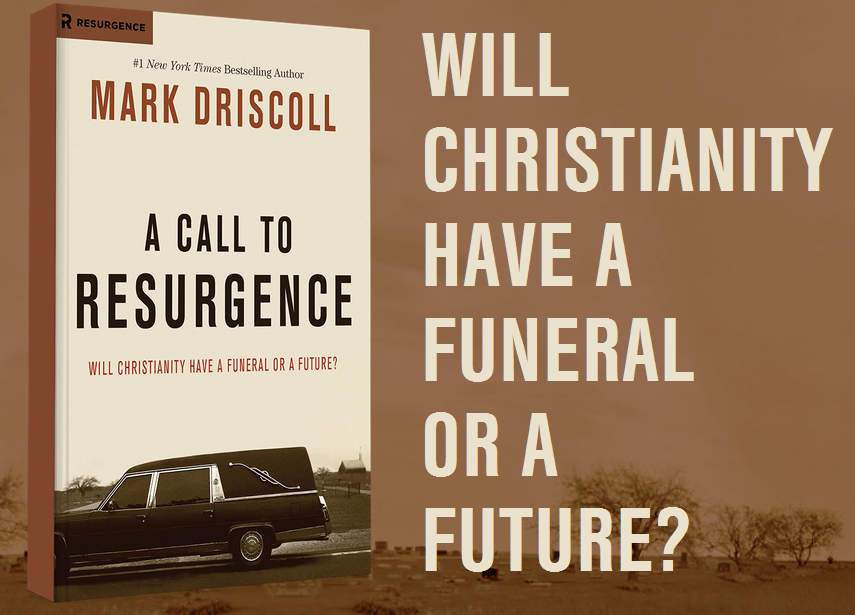
Book Review: A Call to Resurgence by Mark Driscoll

resurgence“You didn’t think you were here just to kill time listening to Christian music until Jesus returned or you died, did you? Get to work.” P. 246

“A Call to Resurgence: will Christianity have a funeral or a future?” can be summed up in a simple sentence: Jesus’ church needs to aggressively refocus her attention and energy on the mission of making disciples of Jesus. Pastor Mark nails down the issues the church is facing in the culture of the United States. Regardless of your view of Pastor Mark, this book is a critical read for church leaders. It is a wake up call.

Things have changed
Over the last few years I noticed that culture shifted greatly. The light went on when speaking at a boys camp. When the least intellectual Christian sports jock asks a deeply apologetical question with antagonism towards Christianity- a paradigm shift has come and gone. Mark declares accurately that Christendom is dead in America. Culture will no longer carry Christians’ water and will instead be antagonistic towards it. If this thought is new to you, chapters 1 & 2 will be very helpful in describing the fall of Christendom.

Call it for what it is
Pastor Mark pulls no punches. (He often mentions or alludes to stories where this tendency may have caused some turmoil.) The interplay of humor, truth, humility and a call to focus on Jesus is interesting. He makes his point clear. Throughout the book is a clear message to pastors: It’s time to show courage in our calling.

Loving is a must, character is core, but Jesus is central!
Demonstrating biblical love is critical. I appreciate the issue of community and helping people the book brings out. Also running throughout the book is the issue of character, particularly in men. It is foundational to ministry, but is only accomplished through Spirit-empowerment. (Yes, there really is a 3rd member of the trinity!) All of that is to make Jesus known. We must proclaim a risen savior, Jesus. None of our acts of love or our character maters if we’re not sharing the Gospel.

Tribes & the Holy Ghost
Pastor Mark is not calling for weakened theology, but he is calling for us to speak with each other. Given the rising antagonism that the church is now and will continue to face we simply don’t have time to attack one another. There are issues where we disagree and conversations that should be had, but they shouldn’t distract us from our primary mission. That said, Mark accurately states that the Holy Spirit is a major issue that tribes need to work through. This may sound strange to some, but we must not put out the Spirit’s fire.

The bottom line:
A paradigm shift has come and gone for our country and Jesus’ church needs to quickly sharpen her focus without watering down or editing her message. There is no longer a dominate Christian view like “evangelicalism” anymore, but instead various “tribes” that must get back on mission. I appreciate Pastor Mark’s work and his communication on a much-needed message.

The cost of losing our integrity

Two shifts have occurred in our culture from walking away from morality and objective truth towards moral ambiguity and relativism. 1) We’ve lost our integrity. 2) We’ve insulated ourselves from accountability. In our culture’s quest to be more nuanced and evolved, we’ve created an irresponsible and uncivil environment.

Lack of integrity erodes trust
Fundamental to all scandals of late is violation of trust. People are angered by government surveillance because they’ve seen violation of trust by the IRS. We’ve seen through many institutions: churches, schools, colleges, government, families, etc. a downplay of integrity and an abuse of trust. Lack of trust builds antagonism and erodes civility as culture becomes polarized and reactionary. We are angered by such violations, but why?

Moral relativism erodes accountability
Relativism means we can’t tell someone they are wrong. This further propels us to avoid conflict. Conflict has grand potential of telling someone they’re wrong. Then, once trust is violated, we become angry. Not at what was morally wrong, but at the trust violated. Is integrity more important than trust, perhaps. What we’re seeing now that a lack of morality also equates to a lack of trust. How did this erosion gain so much momentum?

We destroyed accountability with irresponsibility
We the people. We the problem. We don’t trust government because we don’t trust one another. By not being able to declare rights in wrongs; from that avoiding conflict, and from that removing consequences as much a possible, we undermined responsibility. In the name of compassion (which is a good thing) we sacrificed responsibility. Part of this erosion is not understanding how our government and society works. This is not the fault of public education. We the people. We the problem. We created the mess that we’re in.

Yes, we’re depraved
Some in ministry circles push to downplay total depravity, often citing it’s overuse. Some outright deny the doctrine. Until we admit and see the problem, we cannot work towards a solution. While the ultimate solution is the Gospel, there is also a need for civility. God ordained government for a reason. One aspect that is profound about our government is an underlaying understanding of depravity.

The past wasn’t so bad
We view history often as inauthentic because of glaring errors or sins. We sense disillusionment. There are two problems with this. First, we’re no better and our sense of disillusionment is just another form of the judgmentalism we deride and often do. Second, in times past one’s accomplishments were viewed more highly than their faults. We see this at today’s funerals. The integrity, humility and civility of times past allowed one’s accomplishments to outshine their faults. This is a lost art today. In reading from the men of old they did not view themselves as flawless. They were keenly aware of their faults. But, unlike today, they had a framework to deal with that.

The bottom line:
A man of honor is a man of integrity. We need to get back to this basic. In thinking we are more enlightened than times past we’re so much worse than times past as well. We need to get back to declaring right and wrong, to upholding human responsibility. We need to get back to man’s word being everything. We need to get back to three pillars George Washington talked about: education, morality and religion.

Faith & Family

DSC_0286Faith & Family is the foundation to our society and the solution for our society. Undermining these two critical areas will open wide the door to evil. In times of tragedy there is a resurgence in the valuing of faith and family, but there is seldom sustaining action to support them. This foundation needs to be reinforced.

Secularism
I believe there should be no state church. Marriage of church and state proves disastrous. For the church, this became clearly evident in the dark ages. That said, complete removal of religious influence in the public square has not helped our society. In and of itself its a promotion of a religious view. What is lost by this push is the reality of the human soul. Quickly the value of life, morality and civility fall away. Secularism created in our country a narcissistic view of a person with no moral foundation and no purpose. The push to be oneself or pursue one’s dreams leaves a gaping hole in a person’s soul.

Life
Secularism lead to a devaluing of life. While not popular to say, millions of innocent lives are ended each year. As a society we don’t mourn these losses, though we do debate to what extent such loss should be allowed. Millions of marriages, kids, ideas, art, dreams, etc are never given the light of day. A majority of these ended lives are for connivence. Single percent issues (worthy of its own debate) are being used to excuse 98% of atrocities. Either life is precious or it is not. Let us be honest, secularism lead us to value our own connivence more than life.

War on manhood
For at least two decades a war on manhood exists. While the news of late talked of a war on womanhood, I’d submit the opposite is true. We have undermined the role of men in our society and even paint being a man as problematic more than helpful. In the name of equality we undermine, subvert and destroy what is most critical, most needed and most lacking in our society: dads. Look at the crime statistics in relation to fatherless homes.

Privacy laws
Privacy undermines prudence which undermines parenting. It is increasingly difficult for parents to get information about their children, and yet they’re still responsible for them. From medical issues, to even school issues, the issue of privacy as a right isn’t protecting our children. It isn’t protecting marriages either. When we cannot make the wise choice because of privacy law, there is a problem. Further, such undermines the trust that is essential for healthy relationships and healthy families.

Faith
People are seeking their purpose in life. Post-modernism, which I submit is beginning to decline, left society with no bearings. The fruit of both secularism and post-modernism left us bankrupt. We think we’ve evolved given the easy access to technology, yet we’re backwards in our ability to relate to one another. Faith is the glue that holds a society together for faith speaks to the soul and to the conscience. This is something that government and education cannot do. It is also why marriage of church and state should be prevented, but not to the exclusion of religions from the public square. We must deal with our soul.

Family
We need a resurgence in fatherhood. This includes healthy marriages. Most people don’t learn well stressed. Given the raging sea that is many families, is it a wonder we have an education problem? Dad’s provide the bearings and the foundation needed for success. Are there exceptions to this? Yes. But the exception is not the rule. Again, just look at crime statistics in relation to fatherless homes. I’d submit if there was a resurgence of healthy marriages and dads society will greatly change.

A solution
The foundation of faith and family is the solution to our society. This is hard for society to take for this solution requires submission, servanthood, love, endurance, wisdom, responsibility, and moral absolutes. This solution is hard because it requires work, it is messy, and it isn’t easy. It means a debate between what our laws state and what is truly beneficial & prudent for families. It means sacrificing our connivence at the altar of peace. The irony is it’s what we really want but we don’t want what comes with this solution. Faith and family have nothing to do with guns, yet it’s the crux of why we’re seeing the rise of evil in our country.

Civility, freedom and Christian discourse

After the ‘feast of chickens’ I’m seeing much discussion on whether the church should have engaged in the activity. One statement I read on the matter said this: “What if all those people took a day to serve in soup kitchens instead.” The statement has merit, but it misses something as well. Silence is not always king.

Civility
There is a grave lack of civility in our culture. It is completely civil to state one’s beliefs in a matter that is humble and gracious. Current rhetoric about most matters in our country lack civility. To express one’s view of marriage being one man with one women for a lifetime does not mean one is automatically homophobic and discriminatory. On the flip side, one being homosexual doesn’t mean God gave up on them and immediately sentenced them to Hell. God saves all people.

Freedom
Baptists in Virginia strongly pushed for freedom of religion. The reason: many Baptist preachers were thrown into prison for preaching without a license. From this the first amendment was born. The founders also viewed the importance of religion to speak to the conscience of a society, while at the same time understanding the state should not run the ‘church.’ This lead the amendment’s specific wording. The intent of the amendment was to prevent exactly what certain mayors did.

Christian discourse
While the Gospel is first and central, we must also faithfully teach and uphold God’s Word. Culture does not decide what is sin or not, the Bible does. Yes, the act of homosexuality is a sin. That does not make the church homophobic. Jesus saves all, desires to redeem all, and will make all things new. Homosexuals are welcome to church. Why? We’re all broken. It’s not if we struggle with sin, rather it’s what sin do we struggle with? Truth and love must be tied together, and in the Gospel they are.

The bottom line:
If I had the opportunity, I’d bought chicken too. Freedom is too precious to let people trample on it. A line was crossed that should have never been crossed. I agree with the statement above, what if we all served in soup kitchens. But, I also believe a stance for freedom is vital. Both are important. So, church, let’s do both. We must keep the Gospel first and central. Standing for a biblical view of marriage doesn’t mean we hate homosexuals. (If because of this you do, you need to repent and have the same attitude as Jesus.) Standing for a biblical view of marriage means we strive to live according to God’s plan. There is a difference.

We have a dad problem, not a debt problem

“Fathers, do not provoke your children to anger, but bring them up in the discipline and instruction of the Lord.” ~Apostle Paul

Our society has a dad problem. Not a debt problem. Not a… name the issue… problem. We have a dad problem. If you look at crime statistics, school statistics, you name it, you’ll likely be able to trace it to a dad issue.

Why a dad not a man problem?
I think THE crucial aim of a dad is to develop his boy into a man, and to model for his daughter what a great man is. This involves being a man himself. This involves character. This involves being a romancer of his wife. This even involves showing how to get back up from failure. If I had to target one area to win the war on manhood, I’d start with dads.

Father doesn’t mean dad
The ability to cause a life to happen doesn’t make you a dad. Let’s define what a dad is: A dad is a responsible man who defends, disciplines, develops and loves on people. I say people because you can’t be one person at work and another at home. Consistency matters if we’re to develop our kids to be solid adults. Kids pick up on hypocrisy quickly.

The war on manhood
Our society lost what it means to become a man. This came from three things: 1) A consequence of an egalitarian view of the family instead of a complementarian view. 2) Men have abdicated their responsibility of being a man. 3) It takes good dads to to have good dads. Dad’s are the key to turning this around.

The example
If we want a model of what it means to be a man, Jesus is the best place to start. 1) Jesus stayed on mission. He pointed people to God. That’s how He rolled. 2) Jesus patiently pushed, taught and comfortable people. The disciples were a crazy bunch of dudes who often lacked faith and were about themselves. After Jesus rose from the dead, the 12 men acted as selfless servants. 3) Jesus defended people. Jesus sacrificially defended people. A man’s job is to take the hits for others.

The bottom line
Want to solve our debt problem, crime problem, poor problem, etc? Open the door to develop solid dads. Character, principle, compassion, romance, creativity, productivity and joy starts with dad.. For my Christian friends, great dads is the start to great theology.

PS… Thanks, Dad!

Civility is a marathon and we’re out of breath

On January 6th I wrote a blog piece on the need for civility: https://twoznek.com/2011/01/06/a-return-to-civility/ . It is my desire for my boyz to live in a world were ideas are discussed with proper respect and not vitriol. Given the shootings that occurred in Tuscon, AZ soon after the blog post I wrote this: https://twoznek.com/2011/01/11/civility-civility-where-art-thou/ . Civility isn’t easy. I appreciated the way President Obama put it when addressing those hurting in AZ:

“We should be civil because we want to live up to the example of public servants like John Roll and Gabby Giffords, who knew first and foremost that we are all Americans, and that we can question each other’s ideas without questioning each other’s love of country, and that our task, working together, is to constantly widen the circle of our concern so that we bequeath the American dream to future generations.”
~ President Obama.

Failing the Tea Party and the Unions
Statements by public officials and other leaders regarding the Tea Party are the furthest from the concept of what civil discourse is. Note: I am not defending, promoting the Tea Party, nor am I criticizing them in this post. The vitriol within statements regarding the Tea Party pales in comparison of the rhetoric that was scolded soon after the Tuscon shooting.  The rhetoric against the Tea Party is bigoted, caustic and beneath contempt for those holding office. It serves no greater purpose than feed hostilities. For those making such statements to promote or protect unions, it ultimately fails for it gives up the high ground

Beyond party
We see the lack of civility in both parties. President Obama wisely stated “If [the Tuscon shooting] tragedy prompts reflection and debate, as it should, let’s make sure it’s worthy of those we have lost. Let’s make sure it’s not on the usual plane of politics and point-scoring and pettiness that drifts away in the next news cycle.” Sadly we are currently failing in the area of civility. This isn’t a right vs left problem, it is a lack of discernment and wisdom by all of us. We the people are the problem.

The bottom line:
We need to catch our breath n the marathon that is civility. It is time for our leaders to reflect on the rhetoric they are using. They should exemplify civility. We the people should be careful with what we desire. Civility doesn’t mean being emotionless. It does mean we should accord even those we cannot stand proper respect whether deserved or not.

Manic Monday: iShock…

As an Apple fanboy (nut?) I was shocked to read about Steve Jobs retiring as CEO. Then, seeing all the articles pondering what Apple will be like without Jobs interested me. From a leadership perspective here is what I think…

Apple’s best days are ahead…
Enduring organizations hold vehemently to their set of values. The language used over the last decade from Apple centered on its DNA. Steve focused on keeping Apple’s values first and foremost. The saga around the iPhone 4 Gizmodo deal pointed this out greatly.

Apple figured out its culture
Culture leads long term where a person cannot. Apple returned to its culture and who it was. At a point where everyone thought Apple was done, it came back. Many companies have gone through this cycle. Ford is going through this journey.

Apple figured out discernment
Apple figured out the power of no is a stronger yes. This is hard for anyone to do. Learning to say no also sets an organization up to act vs react. Apple astutely states: if people don’t like it, they wont buy it. Apple gave realization that people really want quality & artistic expression.

Apple learned to take steps not add programs
Everything Apple did since ’97 propelled it to the next step. A key part was choosing to focus on usability vs speed & specs approach to development. In the computer race Apple was the tortoise as its 30% market growth over the last few years demonstrates.

Apple may not succeed
Qoheleth states one cannot control what happens after them. Is it possible Apple is Jobs? Yes. Is it possible that for other reasons not related to Jobs Apple will decline? Yes. But, it’s possible for reasons stated above that Apple may endure as well. And, we may suppose, that a day will come when another company will take the reigns of innovation and wow us.

The bottom line:
We cannot control what happens after us.

On current economic issues…

A Facebook friend posted this quote:

“There is no means of avoiding the final collapse of a boom brought about by credit expansion. The alternative is only whether the crisis should come about sooner as the result of a voluntary abandonment of further credit expansion, or later as a final catastrophe of the currency system involved.”
~Ludwig Von Mises (1881-1973)