Tag: church

Becoming a dad is the solution

DSC_0754What would a world without dads look like? Here are some surprising statistics from fatherless children:

  • 63% of youth suicides are from fatherless homes
  • 90% of all homeless and runaway children are from fatherless homes
  • 85% of all children that exhibit behavioral disorders come from fatherless homes
  • 80% of rapists motivated with displaced anger come from fatherless homes
  • 71% of all high school dropouts come from fatherless homes
  • 75% of all adolescent patients in chemical abuse centers come from fatherless homes
  • 70% of juveniles in state-operated institutions come from fatherless homes
  • 85% of all youths sitting in prisons grew up in a fatherless home

Fatherless homes make up nearly 22% of American children. A father in every home will not eliminate crime, but it would not hurt. An involved and time invested father in every home, that would radically change the country. A life without fathers would be catastrophic, and the issue is growing not shrinking. So, here is the solution, if you’re a father, work hard at being a dad.

First step to being a dad is to find a good, godly dad and learn from him
Modeling is critical as being a dad is something that is caught. Just being in the presence of a dad who is active in the life of his children will give one great insight. Interact with this dad and learn all that you can from him. There is no such thing as the perfect dad, but there is such thing as godly examples. By networking with other dads, a growing dad can gain insight, accountability and skill in raising children. Dave Simmons, in his Dad the Shepherd Series, calls this an e-team (Encouragement- team). This is a group of three to five dads who hold each other accountable and learn from each other as they work through how to be a dad. As iron sharpens iron, so one man sharpens another.

Second step to being a dad is to be a part of the body of Christ
The family and the church should not be at odds with each other. My dad’s three goals in my life made church a natural connection to meet those goals, where else could I effectively learn the Bible, discernment and service at the same time? Serving the Lord was the highest ideal growing up. My parents had missionaries over, pastors over, speakers over, ministry teams over, Christian musicians over, Bible studies, etc. They did this to serve Jesus. People from all over the world that call Christ their savior celebrated Christmas at one time at my parent’s house. The mission of the Woznek family was to serve the church because that meant serving God. Get your family to serve together.

Third step to being a dad is to be intentional
My dad had set three clear goals for me, and he held vigorously to them. The goals set for me were simple and guided the decisions he made. My dad did not sub-contract my life to other institutions; he used them to accomplish the goals he set. I wanted to serve at a camp I spent much time at during my summers, but dad would not allow it. This was a great frustration to me. Serving every summer at one camp would limit other experiences I could have. That decision was invaluable. While serving in various ministries, I had multiple experiences to draw wisdom, far more than had I only served at one place. It fit in with my dad’s goal, and it enriched the times I did serve at my desired camp. The way dad used other institutions in my life to reach certain goals produced another attribute to my life.

Fourth step to being a dad is talk talk talk
De-briefing was a regular part of my life. If a dad is not intentional in how he builds his children, debriefing is a very difficult thing to do. The de-brief is the ultimate indicator that involvement is taking place. My dad and I talked about everything. This happened because my dad started when I was young. In my later years I would voluntarily talk with my dad about the days events, there was no “How was school today.” Joys, victories and practical jokes were all shared. De-briefs, however, were also hard when dealing with failure. Without fail a discussion would occur as to why discipline measures were taken. Discipline was talking. Dad would walk me through the choice that was made, and the consequences of that choice. This taught me how to think and how to think biblically.

The bottom line:
The fifth step is the most joyful and the most painful: my dad let me go and became a cheerleader and resource to me. While his goals were met, it is never easy to let one graduate to adulthood. The fifth step would never have had happened if the others were not followed. If I need advice, or to bounce things off someone, dad is there.

Church would be better if people thought like and agreed with me!

Coffee-LoveI finally found the solution to ALL the church’s problems! For sure this will be a chapter in my up and coming book “Humility and how I achieved it.” Oh wait! I do have a chapter about that! Let me be frank, cause I love you. Church has a big y’all don’t agree with me issue. Here is what I mean:

Be a cheerleader
That’s right. Start off by trying to encourage people not be a critic. (Yeah, some of you preacher boys should just stop reading right now and focus on this part.) We all have too many critics but not enough cheerleaders. My critics practically killed me! Cheerleading is a choice.

Be loving
There is nothing more comfortable than being around a loving person. That person may even point out where you’re wrong, like a loving mommy saying “you’re not wearing that are you!?” while baking you epic chocolate chip cookies. Seriously, love comforts. Don’t pour gas on a bad situation. Bring about peace and comfort. That’s what I do.

Be a team
You live as a team or you die as a team. Period. Work together. I do believe the Spirit is readily available to help with this. After all, if we don’t row together alike a team… Work it out and be a team. Easy to do when the above is true! So, get in line and be like me!

Be Loyal
We have affection and and sympathy for people we are loyal to. An we even do that for friends of our friends. So, care about the people I care about.

Be one
Here is what it comes down to: You need to have the same mind and love as me. Really. Church would be so much better this way. Now, I know what you’re thinking. You’re thinking that this whole thing is be in arrogant. “Oh course everything in church would be better if we thought like you, duh!” “You’re just thinking of yourself! What about diversity all?” My response? You’re just thinking about you. In fact, you think church would be better if people were one with you and not me.

Why I’m right and you should be like me
I could have had the good life, but I didn’t. I sacrificed and worked hard just like you do. But, I did it for you and not myself. I put up with a lot. And frankly, it killed me. You humiliated me and being in this job I got blamed for things I didn’t even do. But hear me out. There is a day coming when everyone will agree that I am right and people should be like me. Mark my words: everyone.

The bottom line:
This chapter is called Philippians Chapter Two. My brother Paul wrote it for me. (If y’all think like and agree with him you’ll be well on your way to being like me.) Humility is the KEY! So, what church to be better? Be humble like me. It’s the only thing that work.

Love you all!
~Jesus

Me, Mark Driscoll & Mars Hill

IMG_1460.JPG
Yes, I heard the latest and the deluge of questions that followed. It is an interesting place to be, so here is my response for those asking. Hopefully we are all learning through this:

Be eclectic
A pattern I started in ministry is to follow intensely a local church for a year or two. Mars Hill was one of numerous other churches, and the most recent completed. The reason I do this is to catch the central theme of the church, what lessons I can learn (both from their strengths and weaknesses), and to gain new insights for ministry. It is VERY dangerous to follow one ministry exclusively. A question often asked is who do I follow? Meaning: what big name are you about. My response is I’m eclectic. Some see this as a cop out. Being eclectic is based on advice from an older mentor the national church will never know. Learn from all, but follow Jesus.

Be biblical
The Bible does not give an exemption to biblical peacemaking if a figure is a ‘celebrity’. Much of the mess in the news is slander, gossip and bitterness. I agree with Pastor Mark’s recent statement that the court of public opinion is not the best route to take. Biblical repentance and restoration is a process. Church discipline stops when repentance starts. Further, love does not keep an account of wrongs suffered (1 Cor 13). Dredging up old, repented, and forgiven sins is unbiblical in large measure. It’s what Satan does. The church as a whole dropped the ball.

Be missional
Focus on the mission Jesus gives us. I have read statements to the effect that he glory days of Mark and Mars is over. Such a statement fundamentally misunderstands the Gospel. Is it possible, yes. But, it is also possible that the best years are ahead for both Mark and Mars. I am confident no one wants to declare that once you blow it God will never mightily use you again. Peter, Paul, Samson, Abraham, Isaac, Jacob, etc. would disagree. The other side of conflict is worship. This will further Christ’s kingdom and the purifying of His bride, the church. Focus on being a peacemaker.

Be introspective
A healthy look in the mirror would do us all good, especially pastors. Few people, if anyone, can handle all their past failures being thrown out there with every new ‘development.’ The ‘yeah, but he…’ statements do not help. But for the grace of God, you and I could be in a mess too. Truthfully, many non-celebrity pastors damage churches and church staffs as well. I hear about it regularly. We can blame the pastor, but equally to blame is our cowardliness inaction of biblical peacemaking. Our lack to practice biblical forgiveness. The whole situation says much more about us than about Mark and Mars. We can do better.

Yeah, but…
Yes there are issues. Yes I’m confident they are serious. To yeah, but the ‘yeah, but…’ is it our place to deal with this? Is our national attention helping or hurting the local church? Psalm 73 states how we need to be careful how we speak so as to not undermine a future generation. James’ advice to be quick to hear, slow to speak, slow to anger is missing on many sides. I’m more concerned with the lack of character demonstrated by Christian media than about the situation. So, yeah, but God has a way of working these things out for good.

The bottom line:
God will use this whole situation to His glory. Jesus will use this situation to purify His bride. My response? I think biblical peacemaking is a critical need in all of us and I think we all need to remove that blemish. My prayer is that from this Pastor Mark and Mars Hill comes back stronger than ever. Why? Because God is cool and able to make that happen. He did, after all, cleanse us from ALL our sin. Christianity is about a relationship, repentance and reconciliation. It is not a religion where once we blow it we are done for good. That is legalism and a false gospel.

End times: Why it matters & Why I’m a ‘dispensationalist

Our view of death determines our view of life. Biblical teachings on end times, known as eschatology, is essentially a Christian view of death. The recent trends to avoid or downplay this teaching is unhealthy. Over emphasizing the doctrine is also unhealthy. In the push away from end times I’m often asked why I am a Dispensationalist. My reply is I’m a little ‘d’ not a big ‘D’ because I don’t emphasize the doctrine or focus on the current possible details. The short answer: in studying scripture, it’s what I see it teaching. I submit we should not shy away from end times.

It’s taught in scripture
Avoiding the end times parts of the Bible is to miss significant teachings of Scripture. In Matthew 16, Jesus chides the religious leaders for being able to determine the weather but were clueless on “the signs of the times.” Paul taught on the rapture, whatever view you take on it, to a baby church plant. He then wrote twice to that baby church to clarify end times teaching. The book of a Revelation is all about end times. The Bible does give us a framework and does teach on the end times. It does not give us a specific time table and tells us to not worry about timing (Acts 1:7).

It’s a matter of encouragement and perspective
The rapture and Revelation give us both encouragement and perspective. These essentials are lost if we avoid the end times. The rapture is meant to encourage us when a saint dies. (A strong argument for pre-tribulational rapture.) We don’t mourn as others do because death is a temporary state. The end times give us the needed perspective so we can practice blessing people instead of returning evil for evil. A HUGE part of end times is God balancing the scales of justice of a world filled with injustice. How can I bless those who persecute me when a I’m faced with injustice? The end times gives us the perspective of why.

It’s a matter of God’s character
I’m a Dispensationalist because I think Israel means Israel in the Bible. As Hosea illustrates, God will go after and redeem national Israel as Hosea redeemed his wife from prostitution. I’d submit that spiritualizing Israel in the New Testament makes the Bible ludicrous. Why? What assurance of salvation do we have if God wrote off Israel? This is the issue Romans 9-11 addresses. Further, Paul makes a clear distinction between national Israel and Gentiles in Romans 11. God’s treatment of Israel gives confidence in His treatment of us and the church. God is the God of second chances, of grace, and He keeps His Word.

It’s a matter of our character
Paul’s states in Romans 11 that we should be careful as God did not spare the natural branches, neither will he spare us. Much rejection of Dispensationalsim is arrogance of the grafted in branches. End times keeps us humble before God. For sure humans tend toward arrogance. Churches often become arrogant as well. In Acts 1:7 Jesus didn’t say there is no kingdoms of Israel, he said the timeline was none of our business. In Revelation Israel is specifically mentioned as well as mentions of various nations. End times is a check on our character.

It’s a matter of faith
Hebrews 11 has an end times perspective. It is true that the big issue in theology is a matter of interpretation, but not all views are valid. I believe in the plain interpretation of the Bible, meaning what the author intends to communicate is the meaning. All other viewpoints have no true bearing in how to interpret Scripture. There is a pattern of literal fulfillment of prophecy throughout Scripture. Spiritualizing prophecy yet unfulfilled is to play hermeneutical voodoo. While God is mysterious and did not give us all the answers, He is predictable in that he keeps His word with an uncanny literalness.

The bottom line:
Avoiding the end times is to lose much needed perspective and clarity for godly living. While I do not major on a time line of future events, there is a framework given to us for the purpose of encouragement and perspective. Key to all this is that God is not done with national Israel, just like he’s not done with you or me. His grace, mercy and justice are evident in end times teachings of Scripture. Be carefully balanced, but do not avoid this essential doctrine of Scripture.

Side note:
Much of the antagonism towards dispensational thought started with Augustine who was anti-chiliasm (premailinalsim). While Calvin moderated (somewhat) on the matter, the antagonism towards pre-millennial viewpoints endured. As people act based in what they believe, much anti-semitism came from a non-dispensational viewpoint.

Finding a new church family

IMG_1394I’m asked often by friends and family advice on finding a new church family. This post is much longer than normal, and general advice on the issue, not specific to any one person. I say finding a church family because I despise the term church shopping.  You’re a brother or sister in Christ, not a consumer. Church is family (Ephesians 1). I’m assuming you’re praying over every step. Pray. Pray. Pray! Ok, here we go:

Step 1: Leave justly!
If you’re relocating or if the church is sending you to another ministry, you’ve left justly. Sin is where things get messy. Matters of conscience even more so. It is ESSENTIAL to deal with matters. Leaving quietly to not create a mess robs you & the church of grace. If you are avoiding conflict or are being explosive, repent and work towards reconciliation! If you’re leaving on a good note, you should still connect with the church so people understand why and grow. Be a grace multiplier not a grace robber.

I am not saying it is wrong to ever leave a church family. I am implying that in North America we trend towards consumerism or conflict avoidance too often. Don’t be a tool of satan or live the sinful attitude of church consumerism. To be clear: Make sure you leave justly. Let’s try to avoid awkward when we’re in heaven moments.

Step 2: Take a good look in the mirror!
You are a saint because Jesus paid for your sins. Until you see Jesus face to face you’ll struggle with sin. Second, you are a unique part of the body of Christ. Your struggles and your gifting (often two sides of the same coin) are part of church growth. Before seeking a new family, take time to look in the mirror. How are you doing spiritually? What lessons have you learned from you earlier church ministry? Is there a new passion or calling God is giving you? Are you pursuing God or yourself?

Searching for a new church family will put you in a critical spirit. You will notice lots of things you do not like or worse you’ll overlook things because your consumerism tendencies kick in. (A big sign of that is compromising your theology for preferences.) Look in the mirror and make sure you’re very well aware of the log that is in your own eye. Church is family, meaning your job is to love and support the family. Church is not about you, but do not neglect how God wired you. God may be calling you to a particular church because it lacks what you have to offer, worts and all.

Step 3: Theology then method then people
Sound biblical teaching & theology is essential. If they’re not teaching the Bible, RUN! There is a difference between teaching from the Bible and teaching the Bible. If the church doesn’t hold to sound theology it will not be good in the long run. We act based on what we believe. Key question: How big of a deal is Jesus & the Bible to the church?

Next comes method. If method comes first, repent of ‘methodolatry.’ For example, if you’ll only look at churches with certain music or a certain program like AWANA, chances are good you’re committing to methodolatry. Don’t overlook something because it lacks a method or has a method you’re uncomfortable with. Don’t write off methods either. Use discernment, ask questions. Methodology matters. Sometimes a method that is important to you, but lacking to a church may be a result of no one to lead or support it.

People are essential. Are the people messy or are they white washed tombs? A church can be totally modern, cool, with great music, etc and be a dark, legalistic, dead church. Energy, coolness & size are often inaccurate church health indicators. (For an extreme example of why, just think of the under ground church.) You’re not the savior, but you are family. Can you say I’m here to love, support and serve these people? Solid theology and method is about supporting people in the mission of the Gospel. Healthy churches are quirky and messy regardless of size. Key question: Is the church a happy dysfunctional family?

Step 4: Examine the church
Here are three things to look out for after Step 3: Character over charisma, service over sensationalism, and people over programs. Our culture is driven by consumerism, which means you and I struggle with this too. You’ll need to attend the church for over a month to get some sense of this.

Character: Is the church more interested in who people are or what they do? This is the issue of being over doing. Look for a church that is concerned with who looks at you in the mirror each morning. Key thing to look for: Churches will make mistakes, do they own up to it?

Service: Is the church quick to love and support its church family first and then the community? It’s hard to serve the community if you’re not caring for one another. Both are essential to the mission of the Gospel. A church that isn’t outward focuses isn’t healthy. A church that focuses outwardly but neglects inward care is unstable.

People: Does the church focus on building people up or one what they can get out of people? Does the leadership seek your help in reaching the pastor’s vision, or do they help people pursue God’s calling? Is the church a business or is it family?

Step 5: Making the choice
This will be awkward because it is different. There is no perfect church because church is messy. It may not have what you want because God needs you there to make it happen. It may not be the size church you like or are comfortable with. There will be things you like and things you don’t. At this step the question is: Can you call these people family? If not, why not?

If you’ve been deeply hurt by your earlier church, a key question to work through: Can I heal here? You cannot avoid the healing process. Healing isn’t always about feeling good again, it can be a painful process. Be upfront with church leadership about the need to heal. They’ll give you sound counsel, and may even recommend a church that may be more helpful.

Timeframe:
Finding a church family takes time. It’ll likely take 6 months to a year. Don’t rush the process. When you’re on Step 4 with a church, don’t work on creating a list of churches and then move to Step 5. If Step 4 checks out and Step 5 checks out, welcome home. For military families or others that move often, you’ll naturally pick up this process on a faster pace.

Children:
Don’t look for a church that has something for your children. Reverse the question. Look for a church where your children can be a part. Church isn’t about you and it’s not about your kids either. Activity doesn’t mean discipleship. A small church can be just as vibrant as a large one for discipling your children. Don’t fear large churches. Kids can be dynamically discipled in large churches too. We often hide our consumerism in the name of our children.

Discuss it as a family. Train your children to be mission minded. ‘Did you like’ is a bad question. What children need they often dislike. don’t ignore their input about dislikes, be cautious on how you respond to it. Children can be spiritual champions, we as adults often hold them back. Ask them if there are ways they can support and serve the church. Teach your children through this process that church isn’t about them. When you find your new family, remind your children that you’re there to love and support the people of the church.

What process do you use? What would you add to this?

Reflections on R13 conference

IMG_2359My reason for attending was to gain insight into the direction of culture & the church. The information and input were critical to setting up LFC’s direction. At the end of the day, the most important question at a ministry conference is who did God design your church to be. (Yes, in know it’s Jesus’ church.) I’ve heard and seen many churches get shipwrecked by returning pastors. Prior to the conference, friends reminded me of that fact and that the vision God gives me is important but as a pastor my job is to draw our the vision God gives the church.

Stop hedging
“Just say you like someone. I like Mark Driscoll. Nobody agrees with everything about a person. I don’t even agree with myself sometimes.” ~ Rick Warren
This jumped out at me for several reasons. 1) I’m often asked why I like XYZ, followed by all the reasons I should like XYZ. 2) I was anti-Driscoll for a while and then grew to tolerate him. Seeing how other leaders affected him and sharpened(softened ironically) his ministry I figured I should not hedge. I like Mark too. 3) I’ve frequently heard Rick Warren criticized, especially by followers of John MacArthur. Rick Warren is the first guy I’ve seen get down on his knees and pray for pastors out of all the conferences I’ve been too. I like Rick too!

Serving Jesus hurts
“When, not if… When, not if… WHEN, not if… I said, when, not if you are betrayed…” ~Crawford Loritts
The speakers talked about the wounds of ministry. The larger your influence the more criticism you will take. Betrayal is part of the ministry package. The danger in hurt is acting out of hurt. We must serve out of the Gospel in the Spirit’s power. The temptation to act out of hurt is great and doing such will not produce good fruit. Pain is part of the sanctifying work God is doing through us. Ministry is about being and becoming who God designed you to be.

Vision isn’t about you

“If you think your vision is about you and it’s your vision, then you will hurt people and fail in the vision.” ~Crawford Lorries

Each speaker warned about our identity being in our vision or in the church. What matters more than our vision is our character, who we are when no one is looking. While the push was to grasp a God-given vision, it is our growth in Christ that matters more. If our identity is in our vision and our ministry we won’t let things go and give things away – requirements of a pastor. We are given a message to pass on. (I like Crawford too!)

John MacArthur disappoints
There was no anger or bitterness at John. Many highly view him as a man of God and appreciate his passion to teach the Word. The feeling of John not showing up felt like a let down to people. All the talk about it being a stunt or a trap for John was not true. The X3Watch booth with the cardboard cut out of John and Mark was classic. We laughed at ourselves too. After all, the host speaker called us all stupid. That said, John was respected and he disappointed.

Wake up church!
“Stop practicing repentance leads to hypocrisy, stop preaching repentance leads to heresy.” ~Mark Driscoll
The church needs to actively and intentionally change gears and get back on message. A major paradigm shift in culture has come and gone. The last session unveiled a massive research project on the unchurched or de-churched. Key to this is that the meaning of tolerance has changed. The new definition of tolerance is highly intolerant of Christianity. I’m reserving judgement on “riot evangelism,” but I do believe that love & courage can go together.

The bottom line:
The conference and divine appointments at the conference were well worth the investment. I learned a ton, met with God, and enjoyed the Seattle coffee I missed so much. For sure, I miss judged Mark Driscoll in a few ways. I think the church can learn a lot from him and Mars Hill just as they try to learn lots from others. Perhaps the message of humility is good for all churches to hear.

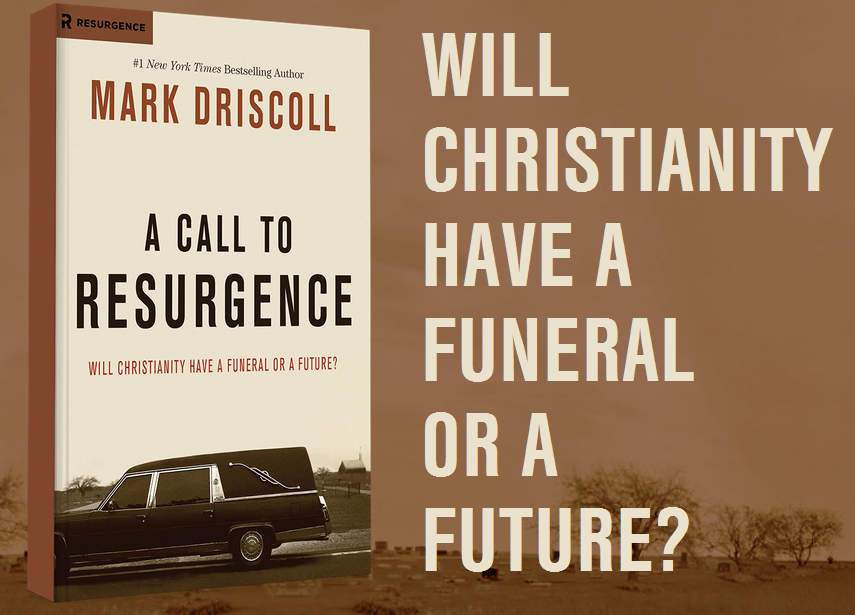
Book Review: A Call to Resurgence by Mark Driscoll

resurgence“You didn’t think you were here just to kill time listening to Christian music until Jesus returned or you died, did you? Get to work.” P. 246

“A Call to Resurgence: will Christianity have a funeral or a future?” can be summed up in a simple sentence: Jesus’ church needs to aggressively refocus her attention and energy on the mission of making disciples of Jesus. Pastor Mark nails down the issues the church is facing in the culture of the United States. Regardless of your view of Pastor Mark, this book is a critical read for church leaders. It is a wake up call.

Things have changed
Over the last few years I noticed that culture shifted greatly. The light went on when speaking at a boys camp. When the least intellectual Christian sports jock asks a deeply apologetical question with antagonism towards Christianity- a paradigm shift has come and gone. Mark declares accurately that Christendom is dead in America. Culture will no longer carry Christians’ water and will instead be antagonistic towards it. If this thought is new to you, chapters 1 & 2 will be very helpful in describing the fall of Christendom.

Call it for what it is
Pastor Mark pulls no punches. (He often mentions or alludes to stories where this tendency may have caused some turmoil.) The interplay of humor, truth, humility and a call to focus on Jesus is interesting. He makes his point clear. Throughout the book is a clear message to pastors: It’s time to show courage in our calling.

Loving is a must, character is core, but Jesus is central!
Demonstrating biblical love is critical. I appreciate the issue of community and helping people the book brings out. Also running throughout the book is the issue of character, particularly in men. It is foundational to ministry, but is only accomplished through Spirit-empowerment. (Yes, there really is a 3rd member of the trinity!) All of that is to make Jesus known. We must proclaim a risen savior, Jesus. None of our acts of love or our character maters if we’re not sharing the Gospel.

Tribes & the Holy Ghost
Pastor Mark is not calling for weakened theology, but he is calling for us to speak with each other. Given the rising antagonism that the church is now and will continue to face we simply don’t have time to attack one another. There are issues where we disagree and conversations that should be had, but they shouldn’t distract us from our primary mission. That said, Mark accurately states that the Holy Spirit is a major issue that tribes need to work through. This may sound strange to some, but we must not put out the Spirit’s fire.

The bottom line:
A paradigm shift has come and gone for our country and Jesus’ church needs to quickly sharpen her focus without watering down or editing her message. There is no longer a dominate Christian view like “evangelicalism” anymore, but instead various “tribes” that must get back on mission. I appreciate Pastor Mark’s work and his communication on a much-needed message.

A change of focus

I’ve read frequently how the best leaders focus on their strengths. Focus on their weaknesses actually inhibit growth. Could the same be true for churches? I’m beginning to wonder if we’re so focused on what we’re not doing right/well that we’re missing what is our strengths. Let me suggest a few strengths we should focus on.

1) Jesus rose from the dead, conquering sin & death, and sits at the right hand of the father.

2) Jesus keeps his own, is in the process of purifying his own, and one day will return to be with his own forever.

3) Jesus states he will build his church, and it will be continued to the day of completion.

4) Jesus maps out a plan for his church that in the end results in her being pure and without blemish.

5) Jesus modeled humility & love while also showing holiness & doctrinal correctness.

6) Jesus told jokes and, after all, uses people like you and I.

7) Jesus gave us a helper, the Spirit, who also helps in our weakness, seals us, keeps us and empowers our ministry.

I could be wrong. But my hunch is the church needs to start focusing on its strengths.

Prayer Mentoring: Elections

We should pray and keep the Gospel first. The success of the church is not determined by who wins elections. It’s success is determined by the work of God in the people of God. It starts with, held up with and ended with prayer.

1 First of all, then, I urge that entreaties and prayers, petitions and thanksgivings, be made on behalf of all men, 2 for kings and all who are in authority, so that we may lead a tranquil and quiet life in all godliness and dignity. 3 This is good and acceptable in the sight of God our Savior, 4 who desires all men to be saved and to come to the knowledge of the truth. 5 For there is one God, and one mediator also between God and men, the man Christ Jesus, 6 who gave Himself as a ransom for all, the testimony given at the proper time. 7 For this I was appointed a preacher and an apostle (I am telling the truth, I am not lying ) as a teacher of the Gentiles in faith and truth. 8 Therefore I want the men in every place to pray, lifting up holy hands, without wrath and dissension.

~ 1 Timothy 2:1-8 NASB

Voting process

  1. Pray
  2. Be informed of things voting on
  3. Pray and search the Scriptures
  4. Vote your conscience
  5. Pray

Forgotten Gifts of the Spirit

Church is team. It takes diversity for a unified church body to work, both within the local church as well as the universal church. Smoldering in the back of my head is the issue of Seminary, thanks in part to Pastor Tim Raymond. Back in May, Pastor Tim, a peer in seminary and a man of God I had the privilege to growing up with, wrote a series on the importance of seminary (Part one Part Two Part Three Part Four). Here is the opening to the series:

“For decades, seminary education has endured the slings and arrows of bad jokes, unkind mockery, and downright slander.  If I had a quarter for every time I’ve heard a disillusioned preacher intentionally misspeak, recalling his years in “cemetery, I mean seminary,” I might be able to buy something edible.  It would be easy for the average Christian to think wrongly, like Nathaniel did with Nazareth, that nothing good can come out of seminary.”

Wisdom & Knowledge
Wisdom & knowledge seem to be neglected gifts. Bill Hybels mentions often how leadership is often not developed or neglected in churches. For a long time, I believe that to be true. As I look over the course of my lifetime, it seems wisdom and knowledge are largely neglected. Churches rarely promote the life of the mind. Wisdom and knowledge feeds solid leadership and solid pastoring. It gives tools to evangelism and mercy. In the fear of heresy, apathy and/or elitism, we’ve neglected two vital gifts.

Seminary is vital
The church both local and universal need places of scholarship where those gifted with wisdom and knowledge can develop and build the body of Christ. I believe it is a duty of a pastor to be a theologian. Having the gift of leadership or shepherding doesn’t give us an excuse to be lax in our theology. It does mean we need to lean on those gifted in ways we are not. I’d be lost preaching through Romans if it were not for those gifted with wisdom and knowledge. While true knowledge can puff up and love edifies, Paul also argues for the importance of the mind in 1 Corinthians 14.

Disciples were diverse
Often the argument against scholarship, like seminary, is the disciples were average men. This is partly true. They were also men who went through a rigorous three-year training program by a master teacher, Jesus. Afterwards the Holy Spirit instructed them. While peter was “blue collar” Paul was clearly an intellectual. While John spoke profound truths simply, Luke and the writer of Hebrews were academically astute. We need all gifts. The formation of God’s Word illustrates this.

The Bible
Biblical and theological literacy are at an all time low. The need for biblical counseling stands at an all time high. There is a relationship between these two things. Perhaps the church is reaping the costs of neglecting the gifts of wisdom and knowledge. What good is leadership or shepherding if it’s not on the firm foundation of God’s Word? Confusion on the Gospel, in worship and the church relationship to culture flow from not heeding wisdom and knowledge. We need to heed Hebrews 5:11-14.

The bottom line:
We need seminary and seminaries don’t need to be places where people lose their faith or passion. Like Tim, I found this to be quite the opposite. I’m immensely grateful for the discipleship Baptist Bible Seminary provided. While I understand that not all will or can attend seminary, I do think one should if at all possible. We need places where we can benefit from those gifted with wisdom and knowledge.