Author: twoznek

Husband...Father...Pastor...

Linx & Stuff

Glenn Beck’s Moralism, God & Country Q: What do you think?
http://www.russellmoore.com/2010/08/29/god-the-gospel-and-glenn-beck/

15 tips to cycling faster Q: Do you bike? What kind?
http://www.bicycling.com/training-nutrition/training-fitness/15-proven-ways-get-faster

A good time management tip! Q: How do you help budget your time?
http://www.stumbleupon.com/su/2wYPtH/attractionmarketingexcellence.com/blog/using-the-power-of-five-to-enhance-your-life/

A brief look at color theory Q: Do you work with people who deal with color?
http://jayce-o.blogspot.com/2010/08/five-important-points-to-know-about.html

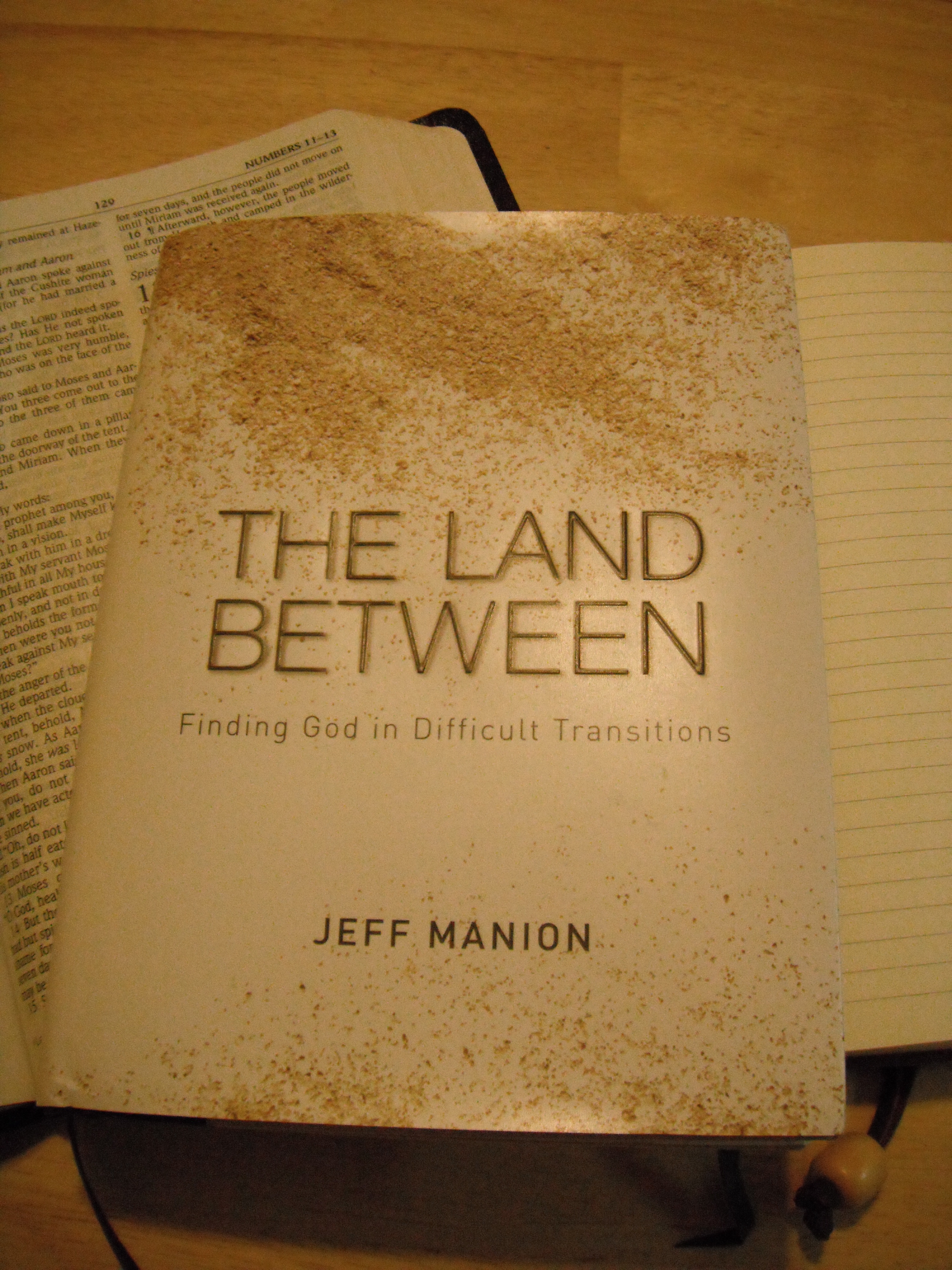
Book Review: The Land Between by Jeff Manion

The Lang BetweenThe sub-title of the book says it all: Finding God in difficult transitions. Jeff Manion is not dealing with a hard day. The Land Between deals with gut wrenching periods of time. This book ranks as a must read. If you are in traveling in the land between, you’re crazy to ignore what Jeff is communicating. Strong words but true, and coming from a guy in such a transition.

The premise
Using Israel’s trek from Egypt to the promise land, Jeff uses lessons from Israel to help guide us in our own land between. The book handles the Bible passages with excellence. Often the Old Testament is moralized and man centered. Jeff brings out what these passages are really about: God at work preparing and refining His people. He describes God as the hero; not just for Israel but you and I as well. Throughout the book the choice is clear between trusting in God and the pit of complaining & bitterness.

Serious stories
Jeff’s places stories a the right spots like an expert chef using spices. They are brief, real, and at times very raw. (Challenging transitions are like that.) While at times he gives the result, there are times where he does not. Jeff’s own land between ends in blessings. In difficult periods, we need to remember that God does get us through. The stories shared bring reality to light. (Like wondering when the transition will be over.) He clearly articulates the dirty reality of hard times.

The book
The book reads easily and conversationally. I appreciate how the book handles Bible texts well, while not academic in their explanation. That skill is hard to find. The book is applicable in the sense of our relationship with God; the choices we are faced with, the emotions that will boil in us (they will boil) and the intimate involvement of God throughout. Jeff took roughly 200 pages would could be volumes. The Land Between is the perfect size, depth and readability for his intended audience; those of us in the land between.

The bottom line:
The last thing we want to hear is another book we should read when in difficult transitions. This is a book we should read. Why? 1) Israel made costly mistakes that can be avoided. 2) We need to remember that God is not merely with us, He is intimately at work in us. 3) It is not a lassie tale of hard times turned good. The Land Between lays out the road map for our hard journey. More than the insane details of our challenges, we must embrace God. The feeling I got after reading The Land Between was calm resolve. Not the emotion I expected.

There are not many books I’ve read were I have a wish to thank the author in person. Jeff, thank you for you for the map of the desert!

God to us: Where were you when…

Job 38 is a good reminder that God is God and we are not. While it is ok to get mad at God, question Him, or even doubt, in the end we come to this conclusion: God is God and we are not. It is extremely hard to accept “I am God” as the reason for something happening. Even with all his questioning, Job did not sin. In his trial God clearly wanted Job to know that “I am God” more than the reason why.

1 Then the LORD answered Job out of the whirlwind and said, 2 “Who is this that darkens counsel By words without knowledge ? 3 “Now gird up your loins like a man, And I will ask you, and you instruct Me! 4 “Where were you when I laid the foundation of the earth ? Tell Me, if you have understanding, 5 Who set its measurements ? Since you know. Or who stretched the line on it? 6 “On what were its bases sunk ? Or who laid its cornerstone , 7 When the morning stars sang together And all the sons of God shouted for joy ? 8 “Or who enclosed the sea with doors When, bursting forth, it went out from the womb ; 9 When I made a cloud its garment And thick darkness its swaddling band, 10 And I placed boundaries on it And set a bolt and doors, 11 And I said, ‘Thus far you shall come, but no farther ; And here shall your proud waves stop ‘?

12 “Have you ever in your life commanded the morning, And caused the dawn to know its place, 13 That it might take hold of the ends of the earth, And the wicked be shaken out of it? 14 “It is changed like clay under the seal ; And they stand forth like a garment. 15 “From the wicked their light is withheld, And the uplifted arm is broken. 16 “Have you entered into the springs of the sea Or walked in the recesses of the deep ? 17 “Have the gates of death been revealed to you, Or have you seen the gates of deep darkness ? 18 “Have you understood the expanse of the earth ? Tell Me, if you know all this. 19 “Where is the way to the dwelling of light ? And darkness, where is its place, 20 That you may take it to its territory And that you may discern the paths to its home ? 21 “You know, for you were born then, And the number of your days is great ! 22 “Have you entered the storehouses of the snow, Or have you seen the storehouses of the hail, 23 Which I have reserved for the time of distress, For the day of war and battle ? 24 “Where is the way that the light is divided, Or the east wind scattered on the earth ? 25 “Who has cleft a channel for the flood, Or a way for the thunderbolt , 26 To bring rain on a land without people, On a desert without a man in it, 27 To satisfy the waste and desolate land And to make the seeds of grass to sprout ? 28 “Has the rain a father ? Or who has begotten the drops of dew ? 29 “From whose womb has come the ice ? And the frost of heaven, who has given it birth ? 30 “Water becomes hard like stone, And the surface of the deep is imprisoned. 31 “Can you bind the chains of the Pleiades, Or loose the cords of Orion ? 32 “Can you lead forth a constellation in its season, And guide the Bear with her satellites ? 33 “Do you know the ordinances of the heavens, Or fix their rule over the earth ? 34 “Can you lift up your voice to the clouds, So that an abundance of water will cover you? 35 “Can you send forth lightnings that they may go And say to you, ‘Here we are’? 36 “Who has put wisdom in the innermost being Or given understanding to the mind ? 37 “Who can count the clouds by wisdom, Or tip the water jars of the heavens, 38 When the dust hardens into a mass And the clods stick together ? 39 “Can you hunt the prey for the lion, Or satisfy the appetite of the young lions, 40 When they crouch in their dens And lie in wait in their lair ? 41 “Who prepares for the raven its nourishment When its young cry to God And wander about without food ?

The bottom line:
Are we ok with God being God? Can we accept that?

Manic Monday: Be real & listen

I watched a video with Fancis Chan, Mark Driscoll and Joshua Harris. I’m not quite sure what the discussion was about, but Mark switched the topic to what Francis is doing. The conversation exemplified speaking the truth in love, asking hard questions, and theology. I encourage you to take the time to watch and listen here. It’s about 15 min.

Note these things:

1) A concern and valuing of a brother takes precedent over the agenda.

2) The issue was discussed in community at Francis Chan’s church.

3) The Bible and the Gospel drove the conversation and issue.

4) The spirit of love, concern and truth.

We need to be real with each other in a way that is gracious and loving while also being truthful and discerning. We also need to have theology be a driving force in our discussion processes. Too often we assume the theology and disguise our conversations as “general revelation” or “it’s not an “un-biblical” issue, just a “non-biblical” one. We act based on what we believe. This conversation is an example of that. We need more of this kind of talk in churches.

(especially on Monday)

http://thegospelcoalition.org/blogs/tgc/2010/08/30/what%E2%80%99s-next-for-francis-chan/

Linx & Questions

Here are some links that stood out this week. Enjoy & ponder…

Steve Jobs on branding: Q: How does this fit with church?
http://zee.me/blog/steve-jobs-on-branding-video/

Got Cows: Q: How ‘bout a steak?
http://www.mediasalt.com/2010/08/26/no-room-for-sacred-cows-in-a-crop-rotation/

Boeing’s Million pound launch: Q: What enveloped have you pushed recently?
http://www.boeing.com/Features/2010/08/bca_one_million_08_23_10.html

The Bible: Q: Do you ask how or why?
http://donmilleris.com/2010/08/26/why-the-bible-is-a-terrible-book-for-americans/

Faith is not the absence of doubt

At BBC there is the all holy seminary reading room. It’s a humorous title, it’s just the seminary room. One day we were brought into this room. I do not remember which professor it was, but I do remember the warning:

“Many of the books in this room were written by men who knew more about the Bible then some of you ever will, but they missed the point.”

It perplexed me that many of the Bible study tools we have today were built on the work of those ho actually doubted the Bible or doubted inspiration and inerrancy. How can doubt produce coldness to God in once sense, and bring others closer? I don’t know, and hence I’m perplexed.

I do not think scholarship, reason or doubt is the enemy. I do not think giving up these things in the name of faith, pragmatism or focusing on what is most important is biblical. Let me give an analogy for each:

Faith: We sit in many chairs without seeing them first verifying they will hold us up. I say that as I sat in my kitchen chair one day and it collapsed underneath me.

Pragmatism: There is nothing pragmatic about romance. ‘Nuff said.

The biggest thing: Coffee brings me great joy in life, but it’s not the meaning of life. (Though, enjoying it does help ponder the larger things in life.)

Often in churches we get very nervous when someone questions or doubts. We get more nervous when someone declares their doubts. In our quest for Christ likeness, do we forget Thomas- one of the foundation stones to the church. Saul was a doubter. The Roman centurion was not. Is one better than the other? I think not.

The Bible has stories of doubters. I do not think doubt is the enemy of faith, but squelching doubt is. The trial by fire for each human is different. For some it will be life circumstance, others pride, addictions to some and some it will be doubt. People will succeed or fail in these challenges.

Truth is truth. If the Bible is fully truth, as I believe and I am convinced of, then in the end truth will prevail. And if we fear those who doubt, or worse question whether they are really saved in the first place, then we poison the situation. The Bible makes it very clear that salvation is solely a work of God and kept by God. The Bible makes very clear that humans will doubt.

Is our faith in God or in people who don’t doubt? Do we believe salvation is by faith or in people who do not sin? How we approach issues can prevent the ability to help or open the door to greater depths of our faith. Which is more important to us and God? Yes, God gets frustrated by doubt. God also gives them an answer in due time. The bigger issue is pursuing God.

The Bottom line:
Squelching doubt is an odd form of denying the power of God. Like any other challenge in life, we should treat doubters with love, patience and respect. Not from  superiority and they are wrong, but a human understanding that each person has their own trial by fire… Let’s be honest, we all at times have doubts. God knows that.

“If we are faithless, He remains faithful, for He cannot deny Himself.” 2 Timothy 2:13

Why not Wednesday? Big Things

One of the things I love about the Museum of Flight is Jadon. He stares in awe at the massive planes before him at one moment, and then plays with his toy plane underneath the wing of the first 747 the next. He talks about the planes, makes noises, calls them different names. But, when he sees the 747 he says one word: Plane!

Certain big things are the engines of our lives. The most significant is character. Before Jadon was known to exist, a key question I’ve been asking myself is what are the big things I want my kids to have. The list became more refined when I heard the words: It’s a boy!

Big project #1:
I’ve been working on a novel for Jadon about the major virtues I want him to hold. Virtues are timeless. While the situations in life Jadon will face differ from mine, the virtues will hold just as true. The novel will center on this concept.

Big project #2:
Each birthday I write a letter to my boys in a journal. From time to time I write other things as well. These are thoughts, ideas, or quips I have for them. I am not sure when I will hand them the journals. I’m debating junior high or graduation from high school. There is wisdom I want to impart to them.

Big project #3:
I narrowed the focus of what I want for my boys: 1) To be strong men of God, 2) To be men of character and 3) To be who God designed them. A narrow focus helps and is essential.

The bottom line:
How each man passes down wisdom to his children is different. One thing remains true: good dads often narrow the focus to just a few things. This is important. There are many skills, virtues, abilities, etc in life. But, only a few are big, long-lasting, and essential. Virtue of character is a thing in life I want Jadon to awe and play under. That when he sees it he will say: Plane! It is an engine that will power his life.

If you were God…

…How would you make yourself known? Would you even bother? Which would you chose?

Creation: Make a perfect paradise for all to enjoy!
(+) There are no struggles. It’s perfect. As God, you get to walk among the world without getting mad or frustrated at imperfection.

(-) People will reject you made it or will choose to focus on creation and not you.

Miracles:  Supernatural events that go against your created laws of science.
(+) There is clear demonstration of your power that also demonstrates your compassion for people.

(-) People will say ya right, attribute them to something else, or deny it happened all together. Those who benefited or appreciate the act done will soon forget it and move on, things getting back to normal.

Mass-disaster: This can take on a few forms, but it results in massive destruction and death.
(+)This approach clearly demonstrates your power, builds fear and in some ways, like the flood, cleans out most of the problem people. It satisfies your justice.

(-) Long term the reason behind the disaster is forgotten. Short term people will adjust out of fear or will just get mad and more offensive toward you. Injustice remains.

Chosen people: Choose a specific group of people to declare and prove your existence.
(+) There is a constant and tangible revelation of your existence. There is also a model of how you would like people to interact and live among each other.

(-) Your chosen people can become arrogant and/or stop doing what you ask of them. Eventually, people may grow tired of you all together. Your chosen people may not be capable of following your instructions anyway.

A special object: Create or decree a special object as pointing to your existence.
(+) There is a visible and verifiable object pointing to your existence that is more tangible than mere creation. It can become a focal point for people to come together in community.

(-) People will end up worshiping the object instead. Others will try to get the object and use it for their own purposed. Some will get tired of the routine and begin to ignore the object all together.

Become a man: Add to yourself humanity so you can live and interact among people.
(+) You demonstrate humility, a virtue you most admire. You can better claim empathy and sympathy for the plight of your creation. You are able to model and teach in a way no one else can, cutting out the “middle man.”

(-) Plato’s Republic said that if a perfectly just man existed, we’d kill him. Likely those who are in error will become jealous. People may just refer to you as a good guy or teacher. Other will accuse you of being divisive. Oh, and you have to walk among unholy imperfection.

A Book: Have people record who you are in a book by telling them what to write.
(+) Words transcend time. They cannot be completely blocked or stopped. It can act as a guide to how people should live, declare who your are, and give your perspective. After all, words and ideas started massive movements in human history.

(-) People will ignore it or say it is not accurate. Others will abuse it for their own purposes. Even if you divinely keep its accuracy, people will charge that since it was written by man it’s not 100% accurate, or since its details cannot be verified, it will be relegated as myth or primitive. Many will take what you say out of context.

The bottom line:
Place yourself in God’s shoes for a moment. You can choose to reject there even is a God. You can choose to reject absolute truth (doesn’t work in math). You can even chose to not bother to make yourself know. But… If you chose to make yourself know, how would you do it? Do you think it would work?

Maybe God isn’t the problem. God did all the things and people in history to now took the negative of each point… no matter how clear or vague the chosen route is.
A Daily Crouton (bread) Quote:

A friend sent me this quote. Is is true? Is it false? What do you think?

You have to work hard to offend Christians. By nature, Christians are the most forgiving, understanding, and thoughtful group of people I’ve ever dealt with. They never assume the worst. They appreciate the importance of having different perspectives. They’re slow to anger, quick to forgive, and almost never make rash judgments or act in anything less than a spirit of total love….No, wait–I’m thinking of  [Labrador retrievers.] ~David Learn