
Tag: Repentance

The most hated concept in the Bible is love

heart-001Based on actions, I find that love is the most hated concept in Scripture. Love is the most wanted yet least acted on focal point in Christianity. Often the worst perpetrators are those who scold the church for being judgmental and unloving. If we are honest with ourselves, there really is very few people who have this concept nailed down. Ironically, they most likely don’t read blogs and do much social media. Likely that’s correlation not causation. We despise love and the church would be radically different if we acted on love. Here is what I mean…

Love fights for the relationship
A friend once stated that many Christians lack the relational maturity to fight for the relationship. Personal preferences, demands for perfect justice, hurt feelings, etc drown out what the Bible instructs is love. When these occurrences arise, we blame the church for being unloving/judgmental when the person standing in the mirror is guilty. A HUGE part of love is the concept of reconciliation. In North America we can walk across the street to the next church, but biblically we often shouldn’t. Biblical love fights for the relationship.

Love is servant minded
The first offerings of the church were 100%. The Biblical patter of church giving was sacrifice and not 10%. People cringe when a discussion of money comes up and pastors often have to couch carefully the discussions on money. This is a lack of love issue. The flip side of the coin is how we invest our time. We are a very impatient and demanding society. Church leaders have to be cautious when asking people to invest time into ministry given busy schedules. When people say they are burned out, it’s often things outside of church life that is the cause. Often people will give money so as to not have to sacrifice their time. (Ask most churches about volunteering to clean.)

Love assumes the best
A significant portion of christian misunderstandings happens from people assuming the worst. The “yeah, but…” crowd is the worst offender. Their hair-trigger on being easily offended and church-correct language demonstrate this in spades. So does the last election. (Oops, a card game reference.) The social justice crowd in the church is quite guilty of this as well. In some extreme instances, people often have to prove why something is not wrong before they can teach how it is right. Bringing up the needs to act on social justice issues brings this to light. I bet many reading this are thinking: Who is T. Woznek addressing? Is he guilt tripping someone?

We need repentance
Repentance is the key. Those not guilty are the exceptions. If you find an exception, spend time with them to learn what it means to be loving. I find every church has a least a couple. Christians as a whole need to repent and realize we are not loving, as defined by Scripture. Seeing as this is the greatest commandment, a new commandment, and the most excellent way, perhaps we should be much more focused on dealing with this area of repentance.

We need sanctuary
Church is to be a safe place where people can be wrong and broken so healing may result. Often we do not what to go through the pain of making that happen. This would mean fighting for relationships, being a servant, and assuming the best in people. It means choosing forgiveness over justice, submission over arrogance, being a listener over being right. On the other side of the pain is healing and worship, because there we so how profound the Gospel is. Jesus already modeled this for us.

We need a mirror
We hate love. Some reading this will think amen and be thinking of names. Others will say this is laying on the guilt trip. A group has a whole list of “yeah, but…” while another will try and read between the lines. Theologically right of center will say Im going liberal, left of center may ask the the same. The guilty will trying to reason their way out of guilt. The offended will scoff and roll their eyes. Love takes work, it takes choosing to value people first. It means there is a lot of bridges that need to be rebuilt. It is inconvenient.

The bottom line:
Look in the mirror and read what Paul wrote about love in First Corinthians Thirteen. Jesus and the Holy Spirit invested a ton of time teaching on love because we really don’t want to be loving. We need to be. We really do want to be loving. We really what our churches to be a place of sanctuary. If it really is about Jesus, we must master this area of repentance. Jesus already died for this, demonstrated it, and gave us a road map. So, look in the mirror, repent, and why not make love the most cherished concept instead of the most hated. That would be a radical.

P.S. Ok. Who or what am I thinking about? What is between the lines? You, because in biblical love there is no catch. I think our actions speak differently than our words in how we value this concept. So, let’s repent together and be better, because change is possible.
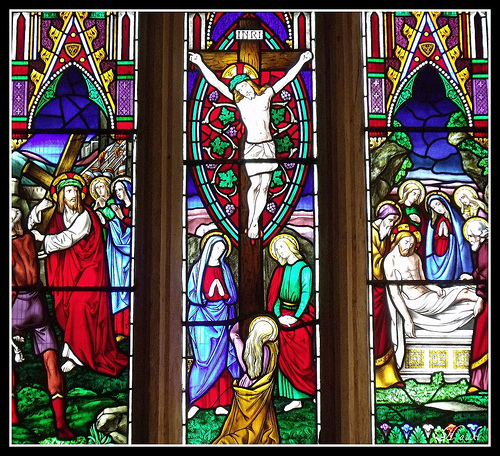
Who turned out the lights for a brighter future?

Stained Glass Window
by Hauki-

Every once in a while an article or articles you post online blows up your feed. Clearly, lighting in a worship center is a sensitive issue. In the ground swell of discussion there are a few concerns and patterns that need to be addressed. The lighting issue is a symptom of a greater issue within the North American Church, issues we do need to repent of.

One God, sneaky idols…
Churches worship methods as Christians worship preferences. While churches decry consumerism, Christians can point out the out of balance focus on methodology. Shedding light on modern idols is essential. We should operate from our theology and not our methodology. Methods change, who God is does not. On the individual side, church is not a commodity or business, it is a family. Being the church via one’s preferences misses a major point in the Bible: It’s not about you. Let us be frank: method worship and preference worship are major idols we the church need to remove.

One family, many discussions…
We are too quick to end discussions, as if the truth is already clearly known or understood. We are too quick to take offense. For example: The no light crowd pounces on the non-biblical issue with a side of evangelism. The all light all the time crowd brings out the design and Bible issue. Boom. Then there are people on the entire spectrum who say we shouldn’t discuss such things as there are more important issues. All three shutter discussion that is healthy and important. As Christians we stop discussion way too often and to our hurt. Cue the passages that talk about listening.

One creator, numerous stories…
Design communicates. Design matters. How we act as a church communicates our message as much or more so than what we say. For instance: Try communicating about Jesus’ birth in a brightly lit room, or discuss heaven in a dimly lit dark one. In both these scenarios the environment is antithetical to the story. Both these stories also need to be communicated with utmost clarity. We must stop treating the arts, such as design, as a non biblical, minor issue. Our mission to clearly communicate and proclaim who God is requires that such be brought under the light of our theology to reach a darkened world. After all, artists are a part of the body of Christ.

One church, open back doors…
In the last few decades there is a price the church paid: the de-churched. The idolatry, shuttering of discussion, and schizophrenic views on the arts cost the church too much. After all, we are family. Perhaps church growth would improve if our back doors were what we shuttered and not discussion, if we valued the glory of God more and our little kingdoms less. We can open our front doors more with artistic brilliance as more darken the seats of our worship centers. That is a worthy discussion, but there are sins we as a church family must repent of first. We’ve already paid too high a price.

The bottom line:
How we light our churches is not a big deal. How we discuss it shines a light on a dark stains the blood of Christ can easily wipe clean. While lighting may not be significant, there is too deep a price we paid. So, why not have the discussion and let the grace which God lavished on us and predestined before the foundations of the world conform us to the image of His son. Why not focus on the long-suffering and patience aspects of love found in 1 Corinthians 13. As a family we can and must do better.

Not Perfect is a Holy Thing: John Mark

Person: John Mark
Epic Fail: Desertion
God’s View: A useful man

Ever been unfaithful, quit or walked out and think God can no longer use you? STOP! God uses quitters. Being unfaithful creates significant consequences and fallout. The issue is not the sin, but in repentance. John Mark quit, but that’s not the last word.

God’s man of action
Mark wrote my favorite Gospel. As a boy I remember always being in and studying the Gospel of Mark. It described Jesus as a man of action. It’s the adventure Gospel. (As a college & seminary student Mark had a lot of action as well.) The Gospel was written to encourage and spur Christians to serving and pursuing Christ. Its abrupt ending (depending on one’s view of the last chapter) begs the question of what’s next.

John Mark served the apostolic community as well, and he contributed to the New Testament. His ministry still impacts people today. The Bible describes him as a fellow worker. He went on missionary journeys. Mark was a man of action.

Mark’s Failure
Mark was a deserter… On a missionary journey Mark deserted Paul at Pamphylia. Paul, also a passionate man of action, did not want to take John Mark on his second missions trip. This created tremendous tension between Paul and Barnabas. This caused the two great leaders to part company.

Barnabas gave Mark a second chance and took him. Paul took Silas. And, as history would have it, Mark demonstrated repentance and stood as a man of action. Quitting produces significant consequences, but it does not have to be the end.

God’s final view
Pick up Mark and bring him with you, for he is useful to me for service. ~2 Timothy 4:11

Paul, who wanted nothing to do with Mark, at the end of his ministry… when he was  at the end of his life… when all were abandoning him… requested the presence of John Mark because he was useful. That is change.

This week as we looked at Not Perfect is a Holy thing, remember this key point: imperfection and sin does not have to be the last word on your life! When we see Christ face to face we will be made perfect and lacking nothing in the realm of holiness because of Christ’s work on the cross. But today… right now… as you’re reading this… you are not perfect, but in Christ you are holy!

The bottom line of Not Perfect is a Holy Thing:
Do not pursue perfection, pursue repentance. Do not make sinless your goal, but actively serving Jesus Christ. You and I will fail, we may even fail in epic ways, but that does not mean God is done with us. The moment we stop pursuing God, the moment when we stop striving for repentance that’s when we cease being holy on Earth.

The Holy man is the one who pursues a life of repentance not perfection, a life of service, not a life of ‘I’m right you’re wrong.’ The holy man lives by grace, and grace covers a multitude of sins. Our Savior is that big!