Tag: Methods

Who turned out the lights for a brighter future?

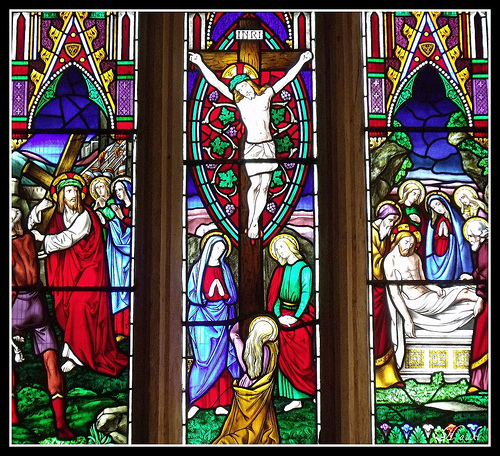
Stained Glass Window
by Hauki-

Every once in a while an article or articles you post online blows up your feed. Clearly, lighting in a worship center is a sensitive issue. In the ground swell of discussion there are a few concerns and patterns that need to be addressed. The lighting issue is a symptom of a greater issue within the North American Church, issues we do need to repent of.

One God, sneaky idols…
Churches worship methods as Christians worship preferences. While churches decry consumerism, Christians can point out the out of balance focus on methodology. Shedding light on modern idols is essential. We should operate from our theology and not our methodology. Methods change, who God is does not. On the individual side, church is not a commodity or business, it is a family. Being the church via one’s preferences misses a major point in the Bible: It’s not about you. Let us be frank: method worship and preference worship are major idols we the church need to remove.

One family, many discussions…
We are too quick to end discussions, as if the truth is already clearly known or understood. We are too quick to take offense. For example: The no light crowd pounces on the non-biblical issue with a side of evangelism. The all light all the time crowd brings out the design and Bible issue. Boom. Then there are people on the entire spectrum who say we shouldn’t discuss such things as there are more important issues. All three shutter discussion that is healthy and important. As Christians we stop discussion way too often and to our hurt. Cue the passages that talk about listening.

One creator, numerous stories…
Design communicates. Design matters. How we act as a church communicates our message as much or more so than what we say. For instance: Try communicating about Jesus’ birth in a brightly lit room, or discuss heaven in a dimly lit dark one. In both these scenarios the environment is antithetical to the story. Both these stories also need to be communicated with utmost clarity. We must stop treating the arts, such as design, as a non biblical, minor issue. Our mission to clearly communicate and proclaim who God is requires that such be brought under the light of our theology to reach a darkened world. After all, artists are a part of the body of Christ.

One church, open back doors…
In the last few decades there is a price the church paid: the de-churched. The idolatry, shuttering of discussion, and schizophrenic views on the arts cost the church too much. After all, we are family. Perhaps church growth would improve if our back doors were what we shuttered and not discussion, if we valued the glory of God more and our little kingdoms less. We can open our front doors more with artistic brilliance as more darken the seats of our worship centers. That is a worthy discussion, but there are sins we as a church family must repent of first. We’ve already paid too high a price.

The bottom line:
How we light our churches is not a big deal. How we discuss it shines a light on a dark stains the blood of Christ can easily wipe clean. While lighting may not be significant, there is too deep a price we paid. So, why not have the discussion and let the grace which God lavished on us and predestined before the foundations of the world conform us to the image of His son. Why not focus on the long-suffering and patience aspects of love found in 1 Corinthians 13. As a family we can and must do better.


Proverbial Thoughts: Pragmatism went down with the Titanic

titanicAs a first grader the Titanic captivated my attention. It was recently discovered by Dr. Robert Ballard and a classmate had a grandmother who was on the Carpathia during the rescue. At one point I had just about everything memorized about the ship that an elementary student could.

I discovered in college the reports on the Titanic investigation. The clever intro to the report was simple: Pragmatism went down with the Titanic. The Titanic set sail the way things were always done. Even with new technologies and size, no one challenged the status quo. New technologies gave a sense of false safety or their potential ignored. New size changed the way things operated. Sailing at full speed on a calm night was normal practice and no injuries happened as a result… until Titanic sunk.

The bottom line:
Change in life happens. Challenge the status quo went changes arrive. Because it always worked doesn’t mean it will work in the future. We cannot predict the future, but we can always revisit why we do what we do. Principles don’t change but methods and programs do and must. After all, pragmatism went down with the Titanic.

Why not Wednesday? Buy a Mac

I was a Mac addict for as long as I can remember. When I attended college they would not support the simple, elegant and (far superior) platform, so for a time I used a PC. I wanted a Mac. Here are some ministry lessons from my love of all things Mac:

Form follows function, but it follows
Aesthetics mean something. While function is essential and a primary mover in what we do or develop, the form does not lose significance. In fact, sometimes the form is equal to the function. The form allows one to focus on the task at hand. God designed life with beauty of form, not just solidarity of function. Aesthetics matter. God is the originator of art and function and art can be one.

Simplicity and usability
The thing I love about Apple is they understand complexity and work hard to not pass that on to the end user. The minimalist philosophy of Apple develops into something that is usable. Less is often more. Apple does not shy away from complexity, but it understands where complexity should be and where simplicity should be. In ministry we often over complicate things such as the Gospel, a relationship with God, and worship. Less really does mean accomplishing more.

Build it well so it runs well
Mac’s do have a steeper price tag. The flip side is they are also built well. When asked why Apple doesn’t have an inexpensive entry level computer Steve Jobs quipped: “We don’t know how to build a cheap computer.” (At points a MacBook ran Windows faster than PC laptops.) Yes, there are Macs that have technical issues, they’re machines. Excellence is important.  Sometimes in the ministry rush we stick on a temporary solution that really becomes permanent. Taking time to build a solid ministry with excellence is counterintuitive. Build well to create well. Be aware of the proverb: buy cheap, pay twice.

You act based on what you believe
The Mac platform took a change from a “best in technical specifications” approach to a “usability” approach. You can have the fastest machine in the world but if you can’t use it well, what good is it? Apple called the Mac strategy the “digital hub.” Apple endured a few years of criticism over this approach as their machines were technically slower. Their strategy still holds, and speed is now a non-issue for the platform. Heavy criticism doesn’t always mean you’re wrong when you stick to your theology. Just be wary of arrogance and not continuing to develop your theology.

Think steps not programs
Each step Apple took with their platform lead into the next step. Each step built the infrastructure needed to move to the next step. Apple innovated more than created, as there were digital music players, smart phones and tablet PC’s prior to Apples (brilliant) incarnations. The success isn’t just due to Apple’s form and usability. There was an ecosystem (infrastructure) to support each new development. In ministry focus on building a church vs a mosaic of programs. It may be a slower process of growth and development, but it will be sustainable and grow well in the long run,

The bottom line
Buy a Mac. People looked down on the strategy over a decade ago. Over a decade ago people would say that Mac would never go beyond 4 or 5% market share. Dell even essentially said Apple should just close up shop. Apple took its time revolutionizing the “computer” industry. In ministry perhaps we should slow down and be more theological and methodical in our approach. The urgency of the Gospel does not mean we have to rush in building churches. After all, ministry is a marathon, not a sprint.