Tag: Gospel

The great divorce: Belief from action

IMG_0349Ask a dumb question and you’re bound to get a bad answer. In the vast online discussion on living for Christ one such questions is rampant. What is more important: theology or how we live? Let me be frank, it’s a dumb question. Why? We act (live) based on what we believe (theology).

God to Joshua
God tells Joshua that he MUST be absorbed with the Torah (first 5 books of the Bible). Why? That Joshua may be careful to do all that is written in it. The result is success. God did not distinguish between action and belief, He called for both. Right actions flow from right thinking. God designed us as theological & philosophical beings. Theology and philosophy are intensely pragmatic because it’s the source of our actions.

Paul to Timothy
A key theme Paul wrote to Timothy was to guard both ministry (living) and doctrine (theology). This theme echoes the idea that God instructed Joshua. Either bad theology or bad living will undercut our mission of making disciples. This is a tension in life that is best left in place. Resolving this tension, which is too often done, creates a bigger mess. Poor Christian living is often a result of bad theology.

The other words of Christ in red…
Jesus makes this point as well. In the seven letters to the churches in Asia Minor Jesus upholds the value of upholding correct theology and living. Jesus calls out the error in either direction and praises success in either direction. While incorrect, people often value the words of Christ in red as more important than the other Holy Spirit (who is also God) parts of the Bible. Hilariously, people often forget the red words in Revelation. Jesus will judge our actions and doctrine.

This divorce hurts our kids
When we focus on belief vs action we lose the ESSENTIAL third rail of proclamation. God wants to be known and made known. The belief vs action debate is inherently self-focused. God upholds correct theology and correct living because He wants us to make Him known. It’s time to hang up the “preach the Gospel and when necessary use words.” God wants us to use words. Bad theology and bad living will undercut our sharing that message. Our focus should be on our spiritual children and grand children.

The trinity
God the Father has a plan. Part of that plan is making Himself known to us. Life is not about us. God leads for His own name’s sake! God gave us the Bible (special revelation) so He could be KNOWN (theology). God the Son acted as a servant to point people to the Father. (He also did a lot of theology.) In communion this aspect of servanthood is demonstrated as we take the bread that symbolizes Jesus’ body which is for us. Becoming like Jesus is fundamentally servanthood (action). God the Spirit empowers God’s plan and living like Christ. The Spirit is our third rail. Acts 1:8 points this out. The Spirit leads us to not just live well, but to make God known (proclamation).

The bottom line:
We act based on what we believe. This drives us to share with others who God is by the power of the Spirit. Being like Jesus involves correct theology AND correct living for upholding our message of a risen savior. Don’t get stuck with the dumb question of belief vs living. Ask this question: Is my theology and life such that I can boldly proclaim the excellencies of Him who came as a servant, died innocently for our sin, rose victoriously on the third day and will soon return as King to make all things new?

Sacrificial Service: Isaiah 53

1 Who has believed what he has heard from us? And to whom has the arm of the LORD been revealed? 2 For he grew up before him like a young plant, and like a root out of dry ground; he had no form or majesty that we should look at him, and no beauty that we should desire him. 3 He was despised and rejected by men; a man of sorrows, and acquainted with grief; and as one from whom men hide their faces he was despised, and we esteemed him not. 4 Surely he has borne our griefs and carried our sorrows; yet we esteemed him stricken, smitten by God, and afflicted. 5 But he was wounded for our transgressions; he was crushed for our iniquities; upon him was the chastisement that brought us peace, and with his stripes we are healed. 6 All we like sheep have gone astray; we have turned–every one–to his own way; and the LORD has laid on him the iniquity of us all. 7 He was oppressed, and he was afflicted, yet he opened not his mouth; like a lamb that is led to the slaughter, and like a sheep that before its shearers is silent, so he opened not his mouth. 8 By oppression and judgment he was taken away; and as for his generation, who considered that he was cut off out of the land of the living, stricken for the transgression of my people? 9 And they made his grave with the wicked and with a rich man in his death, although he had done no violence, and there was no deceit in his mouth. 10 Yet it was the will of the LORD to crush him; he has put him to grief; when his soul makes an offering for guilt, he shall see his offspring; he shall prolong his days; the will of the LORD shall prosper in his hand. 11 Out of the anguish of his soul he shall see and be satisfied; by his knowledge shall the righteous one, my servant, make many to be accounted righteous, and he shall bear their iniquities. 12 Therefore I will divide him a portion with the many, and he shall divide the spoil with the strong, because he poured out his soul to death and was numbered with the transgressors; yet he bore the sin of many, and makes intercession for the transgressors.
English Standard Version

End times: Why it matters & Why I’m a ‘dispensationalist

Our view of death determines our view of life. Biblical teachings on end times, known as eschatology, is essentially a Christian view of death. The recent trends to avoid or downplay this teaching is unhealthy. Over emphasizing the doctrine is also unhealthy. In the push away from end times I’m often asked why I am a Dispensationalist. My reply is I’m a little ‘d’ not a big ‘D’ because I don’t emphasize the doctrine or focus on the current possible details. The short answer: in studying scripture, it’s what I see it teaching. I submit we should not shy away from end times.

It’s taught in scripture
Avoiding the end times parts of the Bible is to miss significant teachings of Scripture. In Matthew 16, Jesus chides the religious leaders for being able to determine the weather but were clueless on “the signs of the times.” Paul taught on the rapture, whatever view you take on it, to a baby church plant. He then wrote twice to that baby church to clarify end times teaching. The book of a Revelation is all about end times. The Bible does give us a framework and does teach on the end times. It does not give us a specific time table and tells us to not worry about timing (Acts 1:7).

It’s a matter of encouragement and perspective
The rapture and Revelation give us both encouragement and perspective. These essentials are lost if we avoid the end times. The rapture is meant to encourage us when a saint dies. (A strong argument for pre-tribulational rapture.) We don’t mourn as others do because death is a temporary state. The end times give us the needed perspective so we can practice blessing people instead of returning evil for evil. A HUGE part of end times is God balancing the scales of justice of a world filled with injustice. How can I bless those who persecute me when a I’m faced with injustice? The end times gives us the perspective of why.

It’s a matter of God’s character
I’m a Dispensationalist because I think Israel means Israel in the Bible. As Hosea illustrates, God will go after and redeem national Israel as Hosea redeemed his wife from prostitution. I’d submit that spiritualizing Israel in the New Testament makes the Bible ludicrous. Why? What assurance of salvation do we have if God wrote off Israel? This is the issue Romans 9-11 addresses. Further, Paul makes a clear distinction between national Israel and Gentiles in Romans 11. God’s treatment of Israel gives confidence in His treatment of us and the church. God is the God of second chances, of grace, and He keeps His Word.

It’s a matter of our character
Paul’s states in Romans 11 that we should be careful as God did not spare the natural branches, neither will he spare us. Much rejection of Dispensationalsim is arrogance of the grafted in branches. End times keeps us humble before God. For sure humans tend toward arrogance. Churches often become arrogant as well. In Acts 1:7 Jesus didn’t say there is no kingdoms of Israel, he said the timeline was none of our business. In Revelation Israel is specifically mentioned as well as mentions of various nations. End times is a check on our character.

It’s a matter of faith
Hebrews 11 has an end times perspective. It is true that the big issue in theology is a matter of interpretation, but not all views are valid. I believe in the plain interpretation of the Bible, meaning what the author intends to communicate is the meaning. All other viewpoints have no true bearing in how to interpret Scripture. There is a pattern of literal fulfillment of prophecy throughout Scripture. Spiritualizing prophecy yet unfulfilled is to play hermeneutical voodoo. While God is mysterious and did not give us all the answers, He is predictable in that he keeps His word with an uncanny literalness.

The bottom line:
Avoiding the end times is to lose much needed perspective and clarity for godly living. While I do not major on a time line of future events, there is a framework given to us for the purpose of encouragement and perspective. Key to all this is that God is not done with national Israel, just like he’s not done with you or me. His grace, mercy and justice are evident in end times teachings of Scripture. Be carefully balanced, but do not avoid this essential doctrine of Scripture.

Side note:
Much of the antagonism towards dispensational thought started with Augustine who was anti-chiliasm (premailinalsim). While Calvin moderated (somewhat) on the matter, the antagonism towards pre-millennial viewpoints endured. As people act based in what they believe, much anti-semitism came from a non-dispensational viewpoint.

Thoughts on the creation debate

DSC_0059The debate between Ken Ham and Bill Nye went as many perceived it would. Both sides made their points in a civil way, rallied their base and demonstrated clearly the issues. Sadly, I think both tended to speak past each other. Ken did a solid job presenting the Christian worldview, though more scientific evidence to support that would view would have mad his case stronger. He did clearly show that one can be a creationist and make significant contributions to science. I fear that point may be missed.

Bill Nye was either ill prepared or he really didn’t care to debate the issue. Either way, what came across to me was tolerating something he disdained to push a naturalistic viewpoint. Did he argue well? Yes, and I’d submit in terms of performance he edged out Ken. However, it came across clearly that he had no concept of the worldview Ken was coming from. A reasonable man would seek to understand and then be understood. Bill operated from a caricature of a creationist not from an understanding of a creationist worldview.

Bill and Ken were even on: failing to prove their thesis, being civil and rallying their base. Nye edged out and beat Ken on performance. In terms of being prepared, Ken was clearly more ready. Over all, I think Ken won the debate as he did show the viability of creationism, though he failed to prove his thesis. I think Ken over reached with his thesis.

The reasonable man
A reasonable man is one who uses analytical thought and understands a system before critiquing it. Bill failed in this. He clearly did not have any understanding of the Bible from Ken’s perspective. His case could be more clear had he more knowledge. A reasonable man would be more attentive to his question being raised. Frequently, Bill stated that if one could offer one proof it would change the world. Ken’s evidence of the tree encased in basalt was blown off. Ken’s rebuttal answered Bill’s question, but was ignored.

No evidence
Evidence’s chances of changing Bill’s viewpoint was small at best. Given his lack of preparedness, I don’t think Bill much cared. While he did conduct himself in a civil manner, he blew off two major points Ken was making: 1) the viability of creationists 2) historical vs observational science. Bill obviously disagreed, but his point came across as trite and pigeon holed creationists as anti-science. Ken’s case clearly demonstrated the opposite. I agree Ken should have offered more scientific evidence, but I also don’t think it would matter.

Jesus first
This debate demonstrated a key point of belief for me: It’s Jesus first, then creation. I am a creationist because of Jesus. Theologically, that is true of all creationists. I’ll write on that later. A key point that is this: How do you scientifically prove a supernatural creation? Is there any proof of that? Yes, his name is Jesus. The feeding of 5,000 plus and 4,000 plus demonstrates instant control over creation & matter. It was observed, recorded and in an environment that was antagonistic to Jesus. (The crowds loved the food, but also yelled crucify him later.) There is no way to pull off those feedings as a con. Also, Jesus rose from the dead as he said he would and when he said he would. This is a recent, verifiable and proven occurrence.

Given the authenticity of Jesus, the probability that Genesis 1-11 is correct carries weight. Jesus took those accounts as literal, and given his assertions as being one with the father, he was there. It is more reasonable to trust Genesis because of Jesus than evolution with billions of years and chance. While I’ve met people who came to Jesus because of a reasoned explanation of creationism, the main thing is Jesus. The biggest weakness of creationism is they don’t focus on Jesus enough when he is verifiably the best evidence that creationism is true.

Worldview is an issue
The debate demonstrated the need for Jesus. It is important for Christians to give a reasoned defense of Scripture and to treat the Bible as a legitimate source. Ken did that very well. At the same time, we must realize we are speaking a different ‘language’ than those who are not in Christ. The Gospel will and does come across as foolishness. This is where I think Ken was more prepared than Bill. Ken understood Bill’s worldview, but Bill did not understand Ken’s. Had Bill taken the time to understand Ken’s worldview, he could have made is point better. Whether from arrogance, disdain or plain lack of being prepared I do not know, but Bill failed at a key point. For Christians, it should demonstrate that a reasoned case for something is not enough. We don’t save anyone, only God does.

Creationism is viable
Ken answered the question that creationism is viable. He gave clear examples of creationists contributing positively to science and engineering- something Bill is pleading for. Ken and Bill agree there is a need for children to pursue science and engineering. That Bill did not make this point is sad. Ken demonstrated the reasonableness of creationism based on a Christian worldview, that creationists have and are contributing positively to science and that there are significant issues with evolution. While Bill made a case and argued well, he did not show that creationism isn’t viable. His lack of understanding a Christian worldview greatly undercut his point.

The bottom line:
First, seeks to understand and then be understood is a key rule of thumb when entering a debate. Second, you cannot argue people into heaven, but we should have a clear and reasonable defense for the hope that is within us. Third, evidence rarely matters when the issue is worldview. Finally, seek to make a difference and not a point. Even if you win the debate that evolution is wrong, if one doesn’t accept the message we received, the debate doesn’t matter. Jesus died and rose again on the third day. The key to passing on that message is a submissive spirit that does good works (1 Peter).

Our job isn’t to reach America, it’s to reach americans. ~Rick Warren

People don’t have enough cheerleaders…

DSC_0527People don’t have enough cheerleaders, but they have plenty of critics. I’ve found the difference is really a choice a person makes. We can choose act as a cheerleader or we can choose act as a critic. In our hyper-critical church world, the choice is often to be a critic.

Biblical love is HARD!
Practicing 1 Corinthians 13 love, or Philippians 4:8-9 is HARD! How hard is it to trust and believe all things? Just by saying that the ‘Yeah, but’ crowd starts bubbling up about discernment or sin. Truth does not trump love nor love truth. How can I assume the best knowing that many are [insert the worst possible stereotype you can think of here]? Because that is what the Bible instructs me to do. After all, love is the more excellent way. Excellence is hard, messy and an intentional choice.

Act don’t react
Cheerleading is an intentional act, criticism is a reaction. Cheerleaders promote what they are FOR. Critics promote what they are AGAINST. Cheerleaders see what’s wrong, but push for what’s best. Critics see what is wrong, and push what is wrong. Cheerleaders praise in public and criticize in private. Critics criticize in public and (maybe) praise in private, hedged with said criticism. Cheerleading is hard because there are things seen that are frustrating. Criticism is easy because it is easier to destroy instead of build up. Cheerleaders trust God. Critics play God. What are you FOR?

Yeah, but the truth must be stated, right?
Promoting what you are for is stating truth. The statement “telling the truth is the most loving thing you can do” often puts truth above love. Think of it this way: out of the heart the mouth speaks. If I speak truth critically instead of lovingly, there is a theological error in my heart. We act based on what we believe. The ‘Yeah, but’ Crowd often speaks truth out of theological error.

God is God and we’re not
Paul didn’t mind his critics judging him or his motives. Why? Because God does. In fact, Paul didn’t even bother to judge himself for the same reason. Paul didn’t mind preachers making a name for themselves. Why? Because the Gospel was still being proclaimed. Paul didn’t go nuclear on false teaching in the Ephesian church. WHAT!? Paul sent Timothy to to instruct false teachers and bring them inline with the Bible. Cheerleading is a patient, long-suffering work that “GOD may perhaps grant them repentance leading to a knowledge of the truth…”

The bottom line:
I choose to be a cheerleader rather than a critic. Praise in public, criticize in in private. Cheerleading is about building up. It is not being naive about faults. Cheerleading is recognizing the value of one’s strengths that we can learn from. The Holy Spirit is really good at his job. He will accomplish his task of making people Christlike. Keep what you are for as the main thing. Promoting such naturally and patiently deals with the things you are critical of.

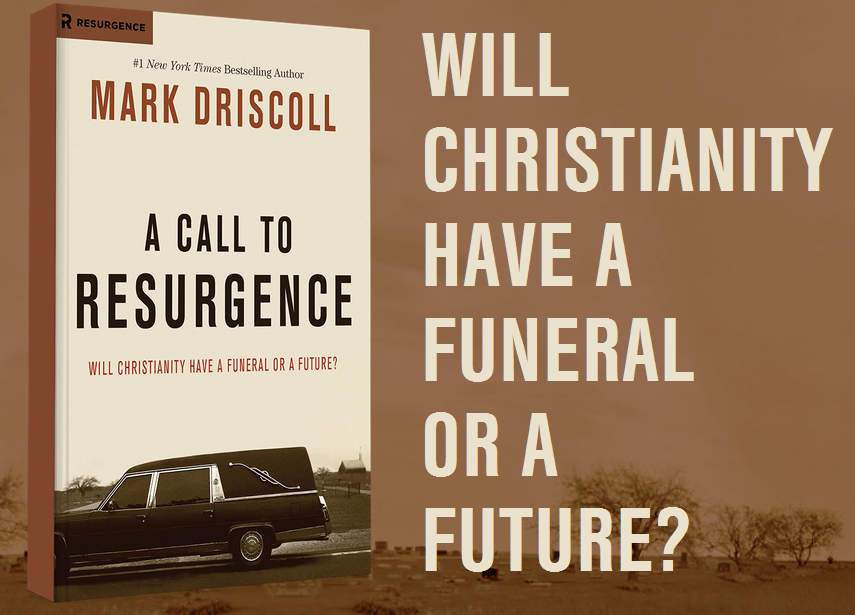
Book Review: A Call to Resurgence by Mark Driscoll

resurgence“You didn’t think you were here just to kill time listening to Christian music until Jesus returned or you died, did you? Get to work.” P. 246

“A Call to Resurgence: will Christianity have a funeral or a future?” can be summed up in a simple sentence: Jesus’ church needs to aggressively refocus her attention and energy on the mission of making disciples of Jesus. Pastor Mark nails down the issues the church is facing in the culture of the United States. Regardless of your view of Pastor Mark, this book is a critical read for church leaders. It is a wake up call.

Things have changed
Over the last few years I noticed that culture shifted greatly. The light went on when speaking at a boys camp. When the least intellectual Christian sports jock asks a deeply apologetical question with antagonism towards Christianity- a paradigm shift has come and gone. Mark declares accurately that Christendom is dead in America. Culture will no longer carry Christians’ water and will instead be antagonistic towards it. If this thought is new to you, chapters 1 & 2 will be very helpful in describing the fall of Christendom.

Call it for what it is
Pastor Mark pulls no punches. (He often mentions or alludes to stories where this tendency may have caused some turmoil.) The interplay of humor, truth, humility and a call to focus on Jesus is interesting. He makes his point clear. Throughout the book is a clear message to pastors: It’s time to show courage in our calling.

Loving is a must, character is core, but Jesus is central!
Demonstrating biblical love is critical. I appreciate the issue of community and helping people the book brings out. Also running throughout the book is the issue of character, particularly in men. It is foundational to ministry, but is only accomplished through Spirit-empowerment. (Yes, there really is a 3rd member of the trinity!) All of that is to make Jesus known. We must proclaim a risen savior, Jesus. None of our acts of love or our character maters if we’re not sharing the Gospel.

Tribes & the Holy Ghost
Pastor Mark is not calling for weakened theology, but he is calling for us to speak with each other. Given the rising antagonism that the church is now and will continue to face we simply don’t have time to attack one another. There are issues where we disagree and conversations that should be had, but they shouldn’t distract us from our primary mission. That said, Mark accurately states that the Holy Spirit is a major issue that tribes need to work through. This may sound strange to some, but we must not put out the Spirit’s fire.

The bottom line:
A paradigm shift has come and gone for our country and Jesus’ church needs to quickly sharpen her focus without watering down or editing her message. There is no longer a dominate Christian view like “evangelicalism” anymore, but instead various “tribes” that must get back on mission. I appreciate Pastor Mark’s work and his communication on a much-needed message.

Act don’t react: Odd Rapid Chemical Reactions

DSC_0336Act don’t react is a core proverb I follow. In studying history, particularly church history, I found people tend to react more than act. This often causes an unbalance or defining yourself as what you’re not vs what you are. Acting means to operate and explain who you are. Given my feeds lighting up with the “Strange Fire” conference, here are my thoughts to illustrate the proverb:

People don’t respond well do a direct assault.
Carefronting is done best from the side door because it focuses on relationships. Rather than set up a conference as a reaction to something, set it up to promote who you are. As such you teach truth and through that you can also rightly critique in error movements. Direct assaults, particularly in today’s culture, can inhibit your point.

Love really does matter!
Can the what about truth, what about sin garbage! If those were your first two thoughts, serious time needs to be spent in 1 Corinthians 13. Love does not equal being wishy-washy. What love focuses on is making a difference, not a point. The cross wasn’t pleasant, easy, or wishy-washy, but it was love. People who often here love and then think “what about truth, what about sin” often want to make a point and not a difference.

Rhetoric matters.
Paul instructs Timothy to guard his doctrine AND his speech. Speaking truth wrongly is sin just as teaching false doctrine is sin. Jesus made a joke about this scenario, something about removing a log from our own eye. We ACT based on what we BELIEVE. Bad rhetoric stems from a bad belief system. Further, bad rhetoric inhibits your goal. Stating “well, I’m standing for the truth” is no excuse. Rhetoric should first promote who you are.

It’s messy!
Ministry is messy! Acting vs reacting is grueling, hard, and takes time. It is not clean cut, often doesn’t get you accolades, but it is what the Spirit teaches us. I’ll let Paul speak to this:
“And the Lord’s servant must not be quarrelsome but kind to everyone, able to teach, patiently enduring evil, correcting his opponents with gentleness. God may perhaps grant them repentance leading to knowledge of the truth, and they may come to their senses and escape from the snare of the devil, after being captured by him to do his will.”

God has a plan, and we’re not God.
The story of Joseph makes this point well in Genesis 37-50. God’s plan will not be thwarted, even by our own mistakes! We’re not God, and while we’re called to guard our doctrine and speak truth, we should ACT on that vs react to other movements. Gently guiding and teaching people about is avoids the egg-shell walk. It also demonstrates class. Finally, it demonstrates humility by letting God be God. After all, God is the one who brings people to repentance.
The bottom line:
Act, don’t react!

Social Media, Politics & The Gospel

IMG_1746Speaking the truth in love is a conversation, it isn’t a statement. To separate social media, politics and the Gospel is counter productive. Life isn’t a group of separate boxes. Life is a unified whole where one area does affect another. As Christians we often use the phrase ‘speaking the truth in love,’ but we often fail to realize that is a conversation, not just making an uncomfortable statement for the benefit of another.

The social media dance
There are three groups in relation to social media, politics and the Gospel. 1)The why can’t we get along group. 2)The politics (left, right or libertarian) over the Gospel group. 3)The drop politics and only focus on the Gospel group. The dance is about trying to figure out the right balance or being naive about things beyond our focus. The danger is we see the three things as separate things.

Social Media
The first group is most vocal when there is an online ‘war.’ They’re the ones who say the online war turns people off from the church, social media isn’t the place for the discussion, etc. The problem is this group often says the same thing in private conversations too. Avoidance of conflict does not bring about peace. It sacrifices love and truth.

Politics
We the people in order to form a more perfect union have to talk. Again, speaking the truth in love is a conversation. Avoiding politics because we don’t like it hinders forming a more perfect union. How do we expect to act civil with something we don’t converse about and how are we to hold our leaders accountable if there is no conversation? We can blame our leaders, but they’re a reflection of us. Maybe many avoid politics because it forces us to look in the mirror and think. (Obnoxious political posts not withstanding.) Groups that often put politics over the Gospel forget love.

The Gospel
The Gospel should permeate ALL our life. It’s not just about getting into heaven and listening to Christian music. Truth AND love are essential. As Christians we should be prayerful, respectful and speak truth. Politics should not be about loyalty to a party, but bringing truth to bear. Justice, mercy and humility are three essentials often missing in our political discourse. To avoid politics to keep a focus on the Gospel removes influence towards peace. Love, truth and respect are needed in political discourse. After all, much of what Jesus taught should affect our political viewpoint.

The bottom line:
We need to get back to speaking the truth in love as a conversation. We shouldn’t hide from speaking to the larger issues our society is struggling with because the Bible has answers and speaks to the soul of each person. To the first group, choose courage. To the second group, tone it down and pursue truth over party. To the last group, show how the Gospel sheds light onto the challenging issues of our day.

The cost of losing our integrity

Two shifts have occurred in our culture from walking away from morality and objective truth towards moral ambiguity and relativism. 1) We’ve lost our integrity. 2) We’ve insulated ourselves from accountability. In our culture’s quest to be more nuanced and evolved, we’ve created an irresponsible and uncivil environment.

Lack of integrity erodes trust
Fundamental to all scandals of late is violation of trust. People are angered by government surveillance because they’ve seen violation of trust by the IRS. We’ve seen through many institutions: churches, schools, colleges, government, families, etc. a downplay of integrity and an abuse of trust. Lack of trust builds antagonism and erodes civility as culture becomes polarized and reactionary. We are angered by such violations, but why?

Moral relativism erodes accountability
Relativism means we can’t tell someone they are wrong. This further propels us to avoid conflict. Conflict has grand potential of telling someone they’re wrong. Then, once trust is violated, we become angry. Not at what was morally wrong, but at the trust violated. Is integrity more important than trust, perhaps. What we’re seeing now that a lack of morality also equates to a lack of trust. How did this erosion gain so much momentum?

We destroyed accountability with irresponsibility
We the people. We the problem. We don’t trust government because we don’t trust one another. By not being able to declare rights in wrongs; from that avoiding conflict, and from that removing consequences as much a possible, we undermined responsibility. In the name of compassion (which is a good thing) we sacrificed responsibility. Part of this erosion is not understanding how our government and society works. This is not the fault of public education. We the people. We the problem. We created the mess that we’re in.

Yes, we’re depraved
Some in ministry circles push to downplay total depravity, often citing it’s overuse. Some outright deny the doctrine. Until we admit and see the problem, we cannot work towards a solution. While the ultimate solution is the Gospel, there is also a need for civility. God ordained government for a reason. One aspect that is profound about our government is an underlaying understanding of depravity.

The past wasn’t so bad
We view history often as inauthentic because of glaring errors or sins. We sense disillusionment. There are two problems with this. First, we’re no better and our sense of disillusionment is just another form of the judgmentalism we deride and often do. Second, in times past one’s accomplishments were viewed more highly than their faults. We see this at today’s funerals. The integrity, humility and civility of times past allowed one’s accomplishments to outshine their faults. This is a lost art today. In reading from the men of old they did not view themselves as flawless. They were keenly aware of their faults. But, unlike today, they had a framework to deal with that.

The bottom line:
A man of honor is a man of integrity. We need to get back to this basic. In thinking we are more enlightened than times past we’re so much worse than times past as well. We need to get back to declaring right and wrong, to upholding human responsibility. We need to get back to man’s word being everything. We need to get back to three pillars George Washington talked about: education, morality and religion.

Boring testimonies are best

bricksI’m not sure who said “We celebrate boring testimonies.” I do thing we should. Really, boring testimonies are best. Why? Well, three things:

Boring testimonies focus us on God
The best testimonies are when people just share what God is teaching them. Nothing major, just little insights in the day. Or, how someone grew normal according to God’s plan. (Such testimonies are rarer and could almost be considered exceptional.) Too often a person gets in the way of God in exceptional stories. God is the hero.

Boring testimonies celebrate the normal
I think we forget how much God wants us to have a NORMAL life. Ok, us preachers tend to over play the radical and the exceptional, but let’s look at reality: God’s design was for us to live a normal life. Sin messed that up! We lost the art of enjoying the simple life. We worship excess pleasure or excess sacrifice. One of the key reasons we’re to pray for leaders and all people is so we can live “peaceful and quiet lives in all godliness and holiness.”

Boring testimonies celebrate faithfulness
“His master said to him, ‘Well done, good and faithful servant. You have been faithful over a little; I will set you over much. Enter into the joy of your master.” Matthew 25:23

Brick buildings are cool
People often look at old brick buildings with fondness. The key to such buildings is how they were built a brick at a time with an eye toward the cornerstone. A brick alone isn’t something to write home about. (Well, unless you’re making bricks without straw and cry out to heaven. It’s been known to happen.) But, placed together brings become a magnificent work of art.

The bottom line:
We need to celebrate the normal, the faithfulness. Greatness is built on the foundation of steady, consistent and dare I say boring faithfulness. Let’s enjoy the simple life in peace and godliness. Hand me another brick and tell me your story.