Tag: bible

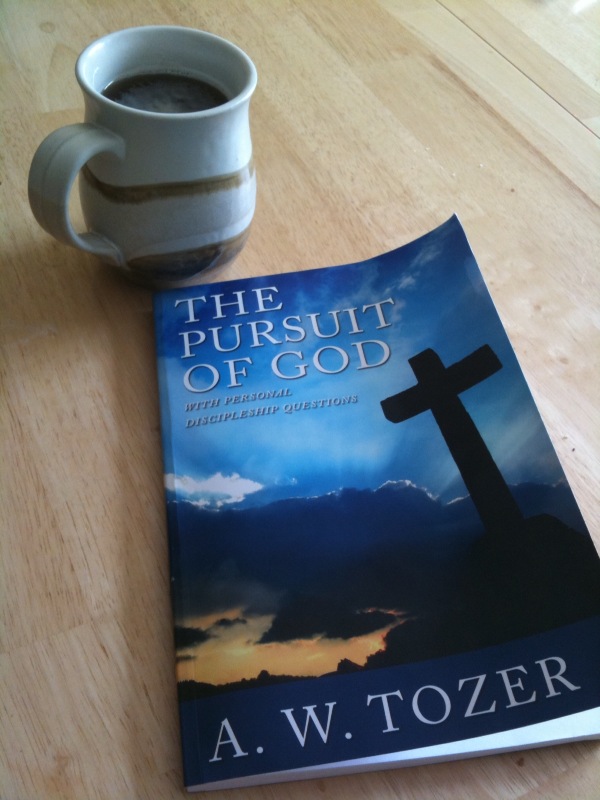
Book Review: The Pursuit of God by A.W. Tozer

Tozer’s book is incredibly technical and mysterious at the same time. He pushes you, hard, and asks very pointed questions about your belief in who God is. Often theology proper (the study of God Himself) is glossed over and assumed. Tozer implies throughout the book that maybe it should be first among the theologies.

God Speaks
The big thing that stands out is how God actively wants to communicate today, just as much as in times past. The very fact that God gave us the Bible speaks volumes on how God wants to actively pursue and interact with people. God is not a set it and forget it person. God speaks actively today as He did in times past. This includes authorial intent, what God spoke and meant then is what He is saying to us today.

“The Bible will never be a living book to us until we are convinced that God is articulate in his universe…I think a new world will arise out of the religious mists when we approach our Bible with the idea that it is not only a book which was once spoken, but a book which is now speaking.” (p. 71-72, Italics author’s emphasis)

More than Saved
We forget God the father. The book brings out something we too easily forget, lose, or never attained. God gave salvation as a means to pursue Him, not as a ‘get out of jail free card.’ The danger of viewing the Bible or Christianity as a psychological self-help community, or merely as a redemptive story is that both neglect the key to the Bible, to faith, to life, and that is a personal God. Jesus will and purpose was the will of the Father. We must get back to that.

Format
Tozer is hard to read. He writes in a way that we do not speak or think like today. This makes getting through the book a little difficult. It’s like reading someone’s journal. He is very humble and very pointed, but it is a chore to get through the book. I say this to be aware of it, not as a criticism. I wish I read this book long ago.

Tozer ends each chapter with what is a lost art in churches today- written prayers. His prayer for himself and those who read the book create a significant impact. One can develop a solid prayer life from the end of each chapter. We often view prayer as only genuine and heartfelt if it is spontaneous. A book of prayers may be helpful and a great resource for today. Each generation must speak to God. Being formal is just as genuine and heartfelt as being spontaneous.

Bottom line:
The Pursuit of God is on my “Must Read List.” It brings into balance that Christianity and the Bile is about God wanting and being known, and everything else is subservient to that foundational principle.

Why Not Wednesday: God speaking

God speaking through a burning bush sounds good right now. Whispers from God are nice. The Balaam route? I’d say sounds crass.

God speaking through angels is scary, uhmin and thumin weird. Jonah’s route, i’d like to pass.

So the Bible I sit and read-giving not my wants but what I need. Though it’s powerful and yet so meek-God tells me to praise Him this week.

So we crave things for a look- instead God gave us a book. Not epic things to grab attention-but powerful words for retention.

Oft I fold my hands to pray, now reminded of His way. God speaks to me from His Word and it tells me my prayer is heard.

Methods and Content and Needs (oh, my!)

There is a tension between methods, content, and needs. With tensions we often pit one against each other, or take the “both/and” approach. This pours into another tendency; using nebulous terms such as balance, equilibrium or compromise. Everyone defines balance differently. We love to prioritize, especially if we’re analytical types, or just make bigger messes, if we’re mystical ministry as art types. How do we navigate these big three things?

The big three defined
What do I mean by methods and content and needs? Here are some definitions with examples of how they look when taken to an extreme:

Methods: What we do.
On steroids? Over emphasis on the non-biblical.. aka maximizing leadership, synergistic program developments, the latest greatest book based on statistical analysis.

Content: Who we are, theology.
On steroids? Over emphasis on the biblical… aka comatose preachy preaching, Word studies from languages we don’t speak, dead orthodoxy.

Needs: Where people around us are at.
On Steroids? Over emphasis on doing… aka the social Gospel, building self-help groupies, incredible families enterprises, political action.

What we need is balance right? In a word, no. Equilibrium? Not so much. Both/and? Sigh. These concepts often get people thinking in terms of 50/50 or compromise. I believe God cares about all three.

Think organic
The body is an incredible organic analogy. No one thinks to prioritize the heart, lungs or brain. Without each of these things you’re quite dead, and perhaps this is why many ministries are dying. We think in terms of health. We seek to sharpen our minds, and build a strong cardiovascular system. These are both keys to a long healthy life.

How the disciples succeeded
In Acts 6 the church was not healthy in an area. Hellenistic widows were being overlooked (need). The old program was not working and a new one was needed (methods). The Apostles recognized that focusing their energy on that problem would take away from what was essential, God’s Word and prayer (content). These things could have been in tension, but they weren’t. Rather the situation called for radical change, an opportunity to live out the Gospel and repentance, and a chance to reaffirm who we are. The church moved forward and God’s power was unleashed.

Where the disciples learned success
WWJD? Luke tells another story. 5,000 men were hungry and in need of food (need). The disciples thought the best idea was to send them away: there wasn’t enough food or enough money to feed everyone (program). Jesus was not about to stop what was essential, His teaching (content). Did  the disciples pass this test? No. But, they learned and God’s power was evident. (When we lack in an area, God will provide.)

The lesson
The disciples learned from failure that ministry is about health. Methods, content, and needs must have an intentional active focus. They did not sacrifice one area to bolster another. They brought up the weaker area through the power of God, while continuing the other essential areas. They changed when needed, tackled opportunities when they arrived, and kept their message front and center.

The bottom line
Think organically. The overall health of your ministry is related to the health of the three areas discussed. Ask: How is your health?

Methods:
Are in you a rut or open to radical change?
How well are you leading?
What steps of change or improvement have you taken lately?

Content:
How well do you know and understand God?
Are you still a student to the Bible & Theology?
What was the last theological topic you’ve studied lately?

Needs:
Do you know where your people are at?
When was the last time you studied your community to see how you can best serve?
How has your ministry demonstrated compassion?