
Category: Life & Learning

Don’t Marry Your Dream by H Hamilton Comings

… H. Hamilton Comings is a dear friend and mentor of mine. There is great wisdom in connecting with pastors seasoned by life & ministry. This post on dreams is excellent. You can see his blog here

Dreams can be like a marriage. When that happens we are in trouble. Friendships can exist on different levels and can move away leaving space for replacement. Marriages can only end in the grief of death or the bitterness of divorce.

God wants his people to cultivate friendships with dreams. A life void of dreams is a life mired in the swamp of complacency or stranded in the barren waste of apathy. However, when a dream becomes a marriage it has become an idol. This is true whether it is the dream house, the dream of some particular achievement or even a dream of ministry (perhaps the most seductive of all dreams).

Maintaining dreams at the friendship level requires not only the faith to pursue them but also the faith to let them go if God moves in that direction. As friendships they can be passionately owned, but they must not become possessively owned. In departure, their loss can be grieved, but the grief must not be allowed to fester into bitterness.

The faith to release dreams can accomplish two things. It can free our spirit to embrace the friendship of a new dream; and it can open the way for God, in his time, to bring back the released dream in better ways than we imagined. Elijah is an example of the first in his transition from a national prophet to a personal mentor. Moses is an example of the second in his transition from a premature deliverer of his people to a prepared founding father of a nation.

A key factor in this faith to pursue and to release our dreams is the recognition that is not easy. For some reason when something is not easy we tend to conclude it must not be right. The path of faith and obedience is rarely easy, and often it is not instinctively desirable. As with any parting of the ways, there will be the need to mourn. This should not surprise us. However, as with any mourning, there will be the need to get up, wash our face, thank God for the things built into our lives through the departed dream and, then accept the tasks at hand even though, at the moment, they may seem like empty husks.

The important phrase in that statement is, “seem like.” While engaged in those empty husks, we can be surprised by the unexpected visit of a new dream. When that happens we must guard ourselves against the temptation to reject it for fear that it, too, will move away unfulfilled. Wrenched away from home and dreams, Joseph, in the book of Genesis, could not have been the man he was in Egypt had he not cultivated the dream of being a man of honor. The testimony of his experience may give us an insight into the direction all dreams take us. Dreams, as with any God-given friendship, ultimately have as their reason for existence the development of nobility of spirit in our lives. When the great testimonies of Scripture are compared, God is not so much the fulfiller of dreams as the grower of souls.

Take a moment to list the dreams which have befriended you. If, in the making of the list, you find a bitterness of spirit at the memory of ones to which you have said “good-bye,” ask God to give you good and motivating memories of those past friendships. As for the dreams which are still part of your life, make sure none of them are things you “cannot live without.” Ask God for the grace to be passionately energized in your dreams because, above all, you are passionately energized by God himself with or without the dream.

Are we asking the right questions?

This TED talk raises some interesting questions to think through. A mentor of mine said: “If you ask the wrong questions you’re likely to come to the wrong conclusions.” Agree or disagree, the video gives us some things to thing through. A big one is: Are we counting the right things?

1st Anniversary of twoznek.com: What I love…

It’s hard to believe that this blog project is a year old now! The best advice on blogging: write what you’re passionate about. One area I infrequently mention is a huge passion of mine: Kelly. The Bible guides us to live with our wife in an understanding way. I respect her wish to stay out of the lime light, and will probably get an eye roll for writing this. So, on the one year anniversary of this blog, here is a glimpse into the love of my life.

Joy
Kelly brings lavish amounts of joy into our house. She helps us boyz enjoy the little things, love each other and play. There is no greater gift a wife can bring than joy. Life in the Woznek house, both in good and challenging times, is a delight from the radiance she brings.

Elegance
There is a charm and refinement to our family because of my love. From incredibly detailed birthday cakes and cards, to graceful Thomas track layouts and “You’re not wearing that are you?” Kelly makes us boyz look good and she delights in it. Her quiet spirit lacks no playfulness. In her innocence, don’t think she didn’t play the prank on you. Kelly makes even the simplest things seem like art.

Hugs
I love holding Kelly. I love watching her hold our boyz. I love times we sit by the fire, or on the couch reading. I love lazy days off when we’re all in our PJ’s cuddling together and laughing. I love the warmth Kelly brings by just being in the room. The softness of her voice, the melody of her laugh and just her presence is unlike anything on Earth.

The bottom line:
I’m head over heels in love with Kelly! God was gracious for allowing me to be with her. This is just a glimpse. Her love of God, her faith, her courage, her dreams, her entire life I adore. She embodies learning and living. Kelly makes life a dream come true.

Don’t try to be clever…

A retired pastor gave me this advice: Don’t try to be clever, you can make things worse and people won’t hear what you are saying. This post is part confessional. When you’re involved in teaching, communication and writing you crave being unique. Given our culture, cleverness seems more a vice than a helpful tactic. I’m not saying cleverness is wrong. I am saying the tactic is overplayed. What I’m writing is easier said than done.

Delivery vs substance: Democracy in America (Published 1835-1840)
Alexis de Tocqueville wrote Democracy in America about his observations and predictions of America. One key prediction as I read is book was this: Soon the appearance or things will be more important than the quality of things. This prediction has very much come true. The vice of cleverness is the appearance vs substance. In the end substance endures. Cleverness, once figured out, carries potential to be dismissed.

Action vs silence: The Pensées (Published 1600’s)
Blaise Pascal wrote The Pensees near the end of his life and did not complete it. We often think of his wager, but the central focus of his apologetic was silence from distraction. Pascal endeavored to bring people to the point of silence where they would be forced to listen to their soul and deal with aspects of life that one would rather avoid. We fear solitary confinement for this reason, he states. In America, our greatest fear is being bored, for in boredom we are forced to think and listen. Our thirst from cleverness comes from this.

Complexity vs simplicity: The Scewtape Letters (Published 1942)
C. S. Lewis described in The Screwtape Letters that distraction and complexity is one of  the best tools and tactics against people. My wife brought this up to me as we discussed the protection from leaving and acting with simplicity. This theme is prevalent throughout church history and too often is ignored. Business is the vaccine against intimacy. Cleverness often takes what can be simple and makes it overtly complex.

Captivating vs seriousness: First Corinthians (Published 1st century)
Saint Paul in First Corinthians juxtaposed man’s wisdom vs God’s. Paul’s focus was to speak the Gospel with clarity. He was not defending being uneducated. Things of a serious nature are best spoken with absolute clarity, leaving as little room for misinterpretation. Clarity sometimes is quite complex, as in the book of Romans, or simple an in the letter to Philemon. Cleverness distracts one to the speaker instead of engaging one in the message.

Fleeting vs steadfast: A friend (Still being written)
Harold H. Comings delights me with his wit. Is wit a form of cleverness? Yes. What surprises me about my friend and others who have wit-ability, is they mastered the art of substance, silence, simplicity and seriousness. The foundation of these things lend itself to being witty, and the discernment on how to engage in proper discourse.  The question of discernment is this: How can I say something in a way that it will withstand the test of time? Cleverness often focuses on the now at the cost of life down the road.

The bottom line:
Focus on substance, silence, simplicity, seriousness and steadfastness. These will carry you to the finish-line. You do not need to be a salesmen or a showman to be an excellent communicator. Enduring works and messages contain most of these elements. If God graced you with the abilities of cleverness, humor, charm or the ability to be poetic- use it to glorify God. But, don’t try to be these things and let us not make them the standard of good vs bad discourse. Perhaps conflict in public discourse would be more civil  if we ceased trying to be clever. This would allow us to listen to and hear each other.

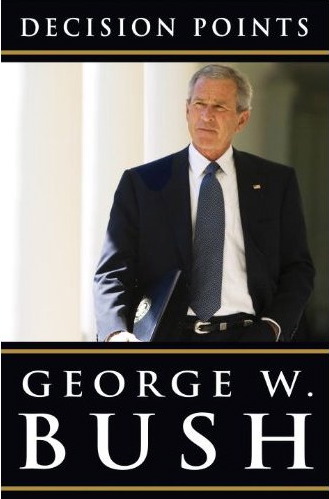
Book Review: Decisions Points by George W. Bush

I highly recommend President Bush’s book, regardless of one’s political disposition. The book deals well with the Learn. Dream. Live. focus of this blog. The book reads well and offers much insight to things other than politics. This review is not intended nor should be viewed a defense of President Bush.

Civility
I am impressed by the President’s quest for civility and new tone. This is something that Bush learned and grew in. The focus on respect for the office of President is profound, and the process of growth in being civil is a skill everyone would benefit from learning. Reading the book also gives a larger reason to be civil; we often do not have the full story. Frankly, if more people were as down to Earth as Bush, or aspired to the civility he describes, American politics would be better.

Choices & Consequences
Responsibility is not a popular term. The book brings about a healthy view and reality of making choices and living with the consequences. Hard decisions are often controversial. The process that repeats throughout the book is: understanding one’s responsibility, gaining wisdom from others, and making sure you have the best view or data of the situation possible. Then, after that, one must act and be willing to face the consequences. Bush does not describe himself as perfect nor do we all agree with the choices he made. But, his process is sound and he acted as a man should.

Family
Bush is a family man. The profound respect he has for his dad is amazing. Honestly, I think the strength of the Bush family is foreign and almost incomprehensible today. I’m sure this issue in spun hundreds of different ways. (Skepticism abounds with public persons.) Taking Bush at his word, his relationship with his dad is one we should all value and aspire to.

Readability
The book reads well and has a refreshing pace. Each chapter focuses on a particular decisions or related decisions. The book is not a biographical timeline, which I found refreshing having read a few biographies of leaders. This style gives you better insight into the real job the president does- making decisions- then the life of a president.

A Warning
The overly political disparity of our country tends towards party rhetoric instead of focus on truth and history. Bush correctly asserts that history will make its own judgments; noting in one point in his book that people are still debating the “first George W.” Sometimes extremely unpopular decisions that people are against are viewed years, decades or even centuries later as wise. Regardless of our political views or our views on Bush, we should listen.

Dismissing what Bush writes as political fluff or just a book written by a ghost writer creates a most dangerous of scenarios: ignore history and you’re doomed to repeat its mistakes. Could such be true? Possibly. But giving the complexities of the modern age, writing such book as this is no easy task. As with all things, discernment is in order.

The bottom line:
Decisions Points by George W. Bush is a worthwhile read regardless of viewpoint. It offers much insight into the job the presidency, a turbulent time in history, and offers much about how to conduct ourselves. As in all things it is wise to listen and to always exercise discernment.

Why not Wednesday? Own depravity

We try to push the idea human depravity away. We hide it, talk it away, claim that it’s a negative outlook, etc. The last we want to do is own it. Some overplay the depravity hand claiming because we are depraved we are therefore worthless. This too doesn’t own depravity. We need to own it.

Conflict resolution
This idea did not go over well as I was training camp counselors in conflict resolution.

“People are naturally good, not depraved,” said a counselor.
“People who say people are naturally good have never worked with children,” I replied.

The group wasn’t buying it. To move forward and be optimistic you first need to understand and see reality. Understand the reality of things and you can move things towards the best. They still didn’t buy in. I told them to give it a week… it only took a couple of hours.

“Trouble makers”
A church that had a large group of unchurched kids asked my advice on dealing with them. Apparently my answer did not have an appreciation for the situation. The rebuttal given was “but they don’t behave!” Aha, there is the problem. My advice was you need to love them first. We polarize discipline and love- they are truly one. If we love we deal with the reality of the situation and work towards the best. Love includes discipline, it’s not exclusive. Good behavior doesn’t come first and then we love. Despite our depravity, Christ acted on our behalf! Jesus loved, saved and then begins to perfect us.

Easier said then done
My kids pour on the love talk when they are in trouble. It KILLS me. They’re cute. They’re adorable, and I LOATH to see them hurt or cry. I knew this moment would come. I knew it would be hard. But love does what is best for the person. It doesn’t act with a cold heart, but it does compassionately deal with reality. This too is the Gospel. As God saves us He also lovingly shapes us. As hard as it is to discipline my boyz, hugging them afterward and showing forgiveness is a powerful moment. It communicates that even when they mess up, they’re still loved.

The bottom line:
We must own depravity. It means doing something that is counter-culture these days: taking responsibility. Bringing it back to the Cross, God knew we could not be perfect. That is why He gave us Christ. Owning our depravity isn’t seeing everyone as evil and worthless- it’s seeing people as being imperfect and need of redemption. Yes we are depraved, but that doesn’t have to be the end of the story. Yes people are depraved, but that doesn’t mean we shouldn’t love them and get involved in people’s lives. That is precisely what Jesus did, and one day we’ll be made perfect because of it.

Hot Stuff: The Song of Songs

Song of songs is an incredibly important and needed book. I believe the book describes a young woman’s process to grown and maturity as she navigates the complexity of love, culture and who she is. The book helps us navigate the unquenchable fire of love.

Song of Songs is an incredibly hard book to interpret. There are many ways to view the book. The common evangelical view is the book is about Solomon and one of his brides.  I struggle accepting that view. Regardless of view, certain things hold true about the book:

1- It celebrates sex and love!
2- It describes sex and love as more than just procreation.
3- It demonstrates a potent respect for the love between a man and a woman.

Regardless of view on the Song, these things stay true. However there are certain things that always bothered me by the popular view that Solomon was the groom.

1- The picture of Solomon does not follow Deuteronomy 17:14-20. I find it a significant contradiction to use Solomon as the standard of romantic love. If anything, the book is a criticism of Solomon and the direction he lead Israel. The Bible celebrates love between one man and one woman. Solomon started well, but he failed miserably.

2- The book’s plot seems to follow a time-line. The common view that the wedding takes place in chapter 3 doesn’t seem to fit with the often repeated phrase “do not wake my love until he pleases.” The plot I would describe as the growth of the bride throughout the book.

3- The Bible celebrates modesty and quietness. There are two distinct descriptions in the book One of natural comparison and one of a flashy more urbanized comparison. The juxtaposition doesn’t seem to be more contrast than analogous. For instance, if Solomon is the groom verse 2:8-9 doesn’t fit well with 3:7. The contrast is too stark- a free running animal followed by a man being carried around.

The best handling of the book I’ve heard is by the late Dr. Colin Smith. He handles the book exceptionally well and gives clear direction on how to use it in our modern culture. Taking the time to listen to them would be fruitful.

Song of Solomon I
http://www.bbc.edu/chapel/archive/20040120_colinsmith.mp3
Song of Solomon II
http://www.bbc.edu/chapel/archive/20040121_colinsmith.mp3
Song of Solomon III
http://www.bbc.edu/chapel/archive/20040122_colinsmith.mp3

The Bottom line: Study the book, its part of the Bible and a helpful part on that!

Loved God, Loved People

C. James Pasma was my first Pastor. When attending seminary my parents let me tag along with them to a party in his honor. An impromptu conversation started about ministry and how he lead the church I grew up in.

Thoughts from my last conversation with Pastor C. James Pasma (1922-2010)

“Biggest advice? Learn to listen to the Spirit. It’s hard, it varies, but learn to listen to the Spirit… If many things come together at the same time, chances are God is telling you something. Listen to Him.”

“I staffed to meet essentials and worked to free people to serve. The best ideas didn’t come from me… They don’t have to come from you. Your job is to feed them, and set them free to serve… Our biggest ministries didn’t originate from me.”

“I looked at the divorced and single statistics in our area and asked who was reaching out to them. Over a quarter of the population was single or divorced. They’re people, and people need to be reached… We studied the Scriptures, prayed about it, and we acted…”

“Treasure seminary. I was not able to go, but if I could go back, I would. The better you know your Bible, the better you can teach it. There is no replacement for knowing the Bible.”

Social Media: Some thoughts

Last year I was impressed by the number of experts on social media, whether self-proclaimed or genuine. It will be interesting to see how 2011 deals with the subject, especially as social media is evolving and constantly changing like one’s facebook profile. Here are some thoughts about social media as I reflect on what all the experts I’ve interacted with said.

Two schools of thought & a crowd
Social media seems to break into two camps: Those who point to something, those who have a presence in multiple things, and the masses.Those who point to something have a “base” from which everything else revolves. The everything approach people engage in multiple social media venues, but they don’t point in a direction per se. This school of thought is not a shot-gun approach, as there is consistency. However, it seems like a nation of islands. The crowd is those who sign up to connect with friends, see their grand kids, or other specific uses.

Consistency is king
Consistency is the key to developing social media. Some call this maintaining a consistent voice, but it also deals with frequency of posting, style, topic, etc. Voice and and the noble gravatar seem to be the main modes of branding now. As your following grows consistency becomes more of an issue.

Plan & systematize
Social media can swallow you whole, especially if you’re into social gaming aspect. Create a system and plan for how you will use social media. Doing this will set boundaries, build consistency and define what social media school you will follow. Planning doesn’t have to lock you in. It actually allows you to change easier.

Social media is public
Social media is a public forum regardless of how tight you set your privacy standards. Given the quasi-eternal remembrance of the internet, this is an essential to keep in mind. An often stated ideas is this: Politics will be interesting 10 years from now. While many social media status updates ask what’s on your mind, it best to filter that through your public voice. Seasoning your social media voice with civility and graciousness doesn’t mean you lack authenticity.

Be present
The biggest danger with social media users is they are not present where they are. Live human interaction is more important than social media at Starbucks. The world survived many years without social media. While smart phones makes social media instantly accessible, it isn’t more important than a live person sitting next to you.

Civility, Civility, where art thou?

Last Thursday I wrote about my desire for my boys to live in a world of civility. The thought process started when Gavin said thank you to me after giving him a simple treat. I treasured the event. Given the grievous incident in Arizona, my wish for my boys grew even stronger.

Two wrongs don’t make a right
The Bible puts it this way: “A soft word takes away wrath.” I have no wish to take political sides on this blog. Even in irate anger, one can show the civility one so much desires. The political vitriol displayed lately is alarming. It is akin to fighting a fire with gasoline.

Evil and responsibility exist
There is evil and brokenness in life. Even with this, people are responsible for their own actions. Evil or brokenness is the root cause of tragedies such as happened in Arizona. Civility, compassion and graciousness are the greatest weapons against evil and brokenness. It’s what Jesus did.

Two prescriptions of civility:
1) Be angry, and yet do not sin; do not let the sun go down on your anger… Let no unwholesome word proceed from your mouth, but only such a word as is good for edification according to the need of the moment, so that it will give grace to those who hear. ~ Ephesians 4:26,29

2) This you know, my beloved brethren. But everyone must be quick to hear, slow to speak and slow to anger; for the anger of man does not achieve the righteousness of God. ~ James 1:19-20

The bottom line
We are responsible for our own actions. Anger is not wrong, but we must be prudent and thoughtful in how we exercise and work through our anger. For sure, in public discourse great restraint and gracious must be demonstrated. Truth can be declared without being inflammatory. Restraint isn’t a lack of authenticity or genuineness. Restraint  is an exercise of wisdom and humility. Our culture could use a large dose of both. These are skills I want my boys to have in abundance.